

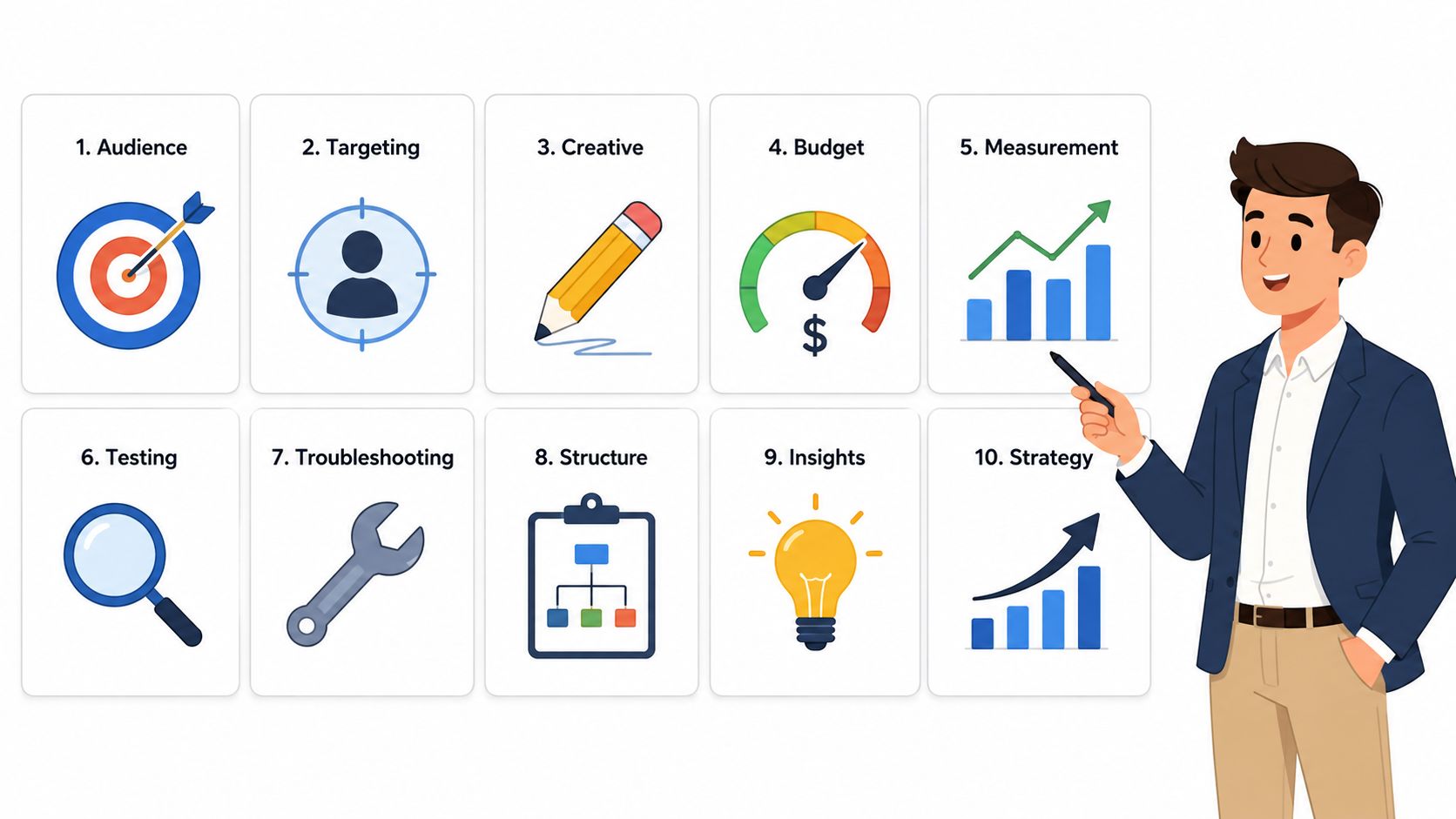
Most Meta ad accounts don't need more budget. They need fewer blind decisions.
When performance slips, teams often reach for the same expensive remedy: increase spend, add audiences, duplicate campaigns, and hope the algorithm finds religion. Usually, the account has a tracking problem, a structural problem, or a decision-making problem. More budget only gives the problem a larger office.
The useful meta ads best practices are operational, not decorative. They tell you what to verify, what to test, when to leave a campaign alone, and which warning signs reveal that your media buyer is guessing. A current benchmark gives the situation some useful context: median CTR across industries was 2.39%, while median CPA was $38.99, CPM was $15.06, median ROAS was 1.88, and CVR was 1.53% in the cited dataset. Those figures, reported by Triple Whale's Meta ads benchmarks, show why attention and profitability must be managed separately.
The recurring rule throughout this guide is simple: fix measurement before judging creative, audiences, or ROAS. Then work down the list in order. The first practices protect the data foundation. The later ones help you turn reliable signals into profitable growth.
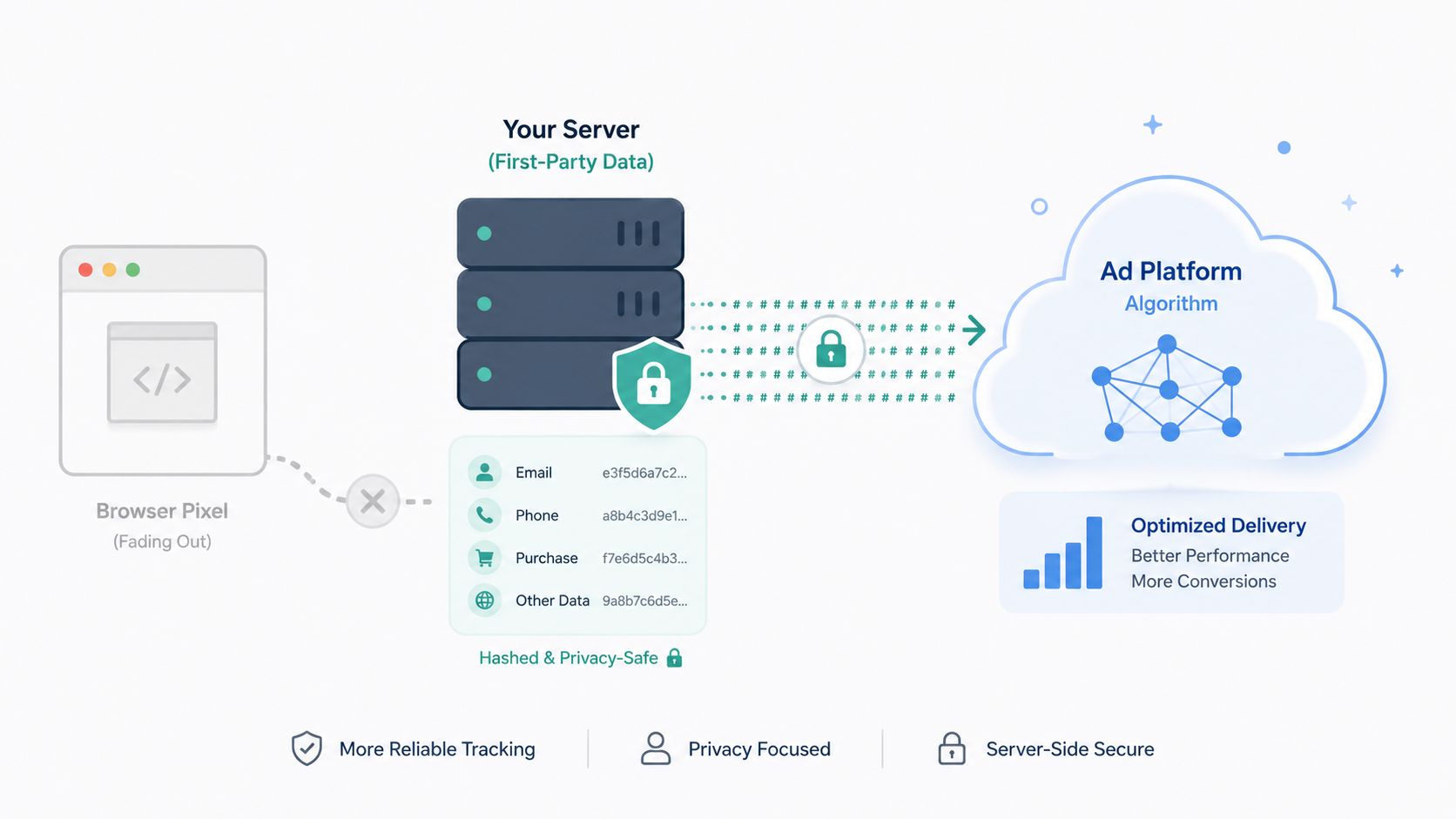
Meta cannot optimize reliably for events it never receives, receives twice, or receives without meaningful value. Conversion API, or CAPI, gives the account a stronger data foundation by sending server-side events directly to Meta.
For an e-commerce advertiser, those events may include a completed purchase and its revenue. For a SaaS company, they may include a demo booking, trial activation, or later customer-status event. Start with actions tied to commercial value. Adding every click and page view before the core events work usually creates noise, not better optimization.
Run the browser pixel and CAPI together during implementation, then verify that both systems report the same action once. Deduplication prevents one purchase from appearing twice and making an average campaign look brilliant. Hash personally identifiable information before transmission, never send raw names, email addresses, or phone numbers, and document event names, parameters, values, and ownership. Backend changes should trigger an event-schema review, not a surprise reporting failure.
Practical rule: If a buyer can explain campaign CTR but cannot explain whether purchase events are deduplicated, the account is not ready for scale.
A brand that sends only “lead” may train Meta to find inexpensive form fillers. A brand that sends qualified outcomes gives the system a clearer commercial signal. A first-party data strategy makes that signal useful beyond a privacy checklist, because CRM outcomes can inform optimization and later analysis.
The hiring signal is direct. A capable media buyer asks about CRM stages, revenue parameters, event deduplication, and offline conversions before proposing a new audience. Ask how they would test a broken event, reconcile platform and CRM totals, and document ownership. If the first recommendation is to raise the budget, keep the wallet closed.
A conversion window is a business decision disguised as a dropdown menu. The right setting should reflect how customers buy, not whichever default survived the last account migration.
A direct-to-consumer product with an immediate purchase path can tolerate a shorter window than a considered B2B purchase. If a prospect reads several pages, speaks with sales, and returns later, a platform report may capture only part of the journey. That doesn't mean Meta deserves credit for every eventual sale. It means you need a consistent way to separate influence, credit, and incrementality.
Start by mapping the customer journey. Ask customers how long they considered the purchase, compare CRM dates with ad interactions, and examine the delay between lead creation and revenue. Then compare attribution settings without changing five other variables at the same time. If the team changes the window, campaign structure, landing page, and creative together, the resulting “learning” is mostly theater.
Attribution modeling guidance is useful here because the reporting question extends beyond Meta's dashboard. Your finance team, CRM, analytics platform, and ad account should use definitions that can be reconciled.
A media buyer who reports a new ROAS target every time the attribution setting changes isn't optimizing. They're moving the goalposts and charging admission.
The stronger hiring signal is a candidate who can explain what Meta is allowed to claim, what the CRM confirms, and what remains uncertain. That person won't promise perfect attribution. They'll build a reporting system honest enough to support budget decisions.
Broad targeting isn't automatically smart, and manual targeting isn't automatically advanced. The correct choice depends on signal quality, conversion volume, sales-cycle length, and how much control the business needs.
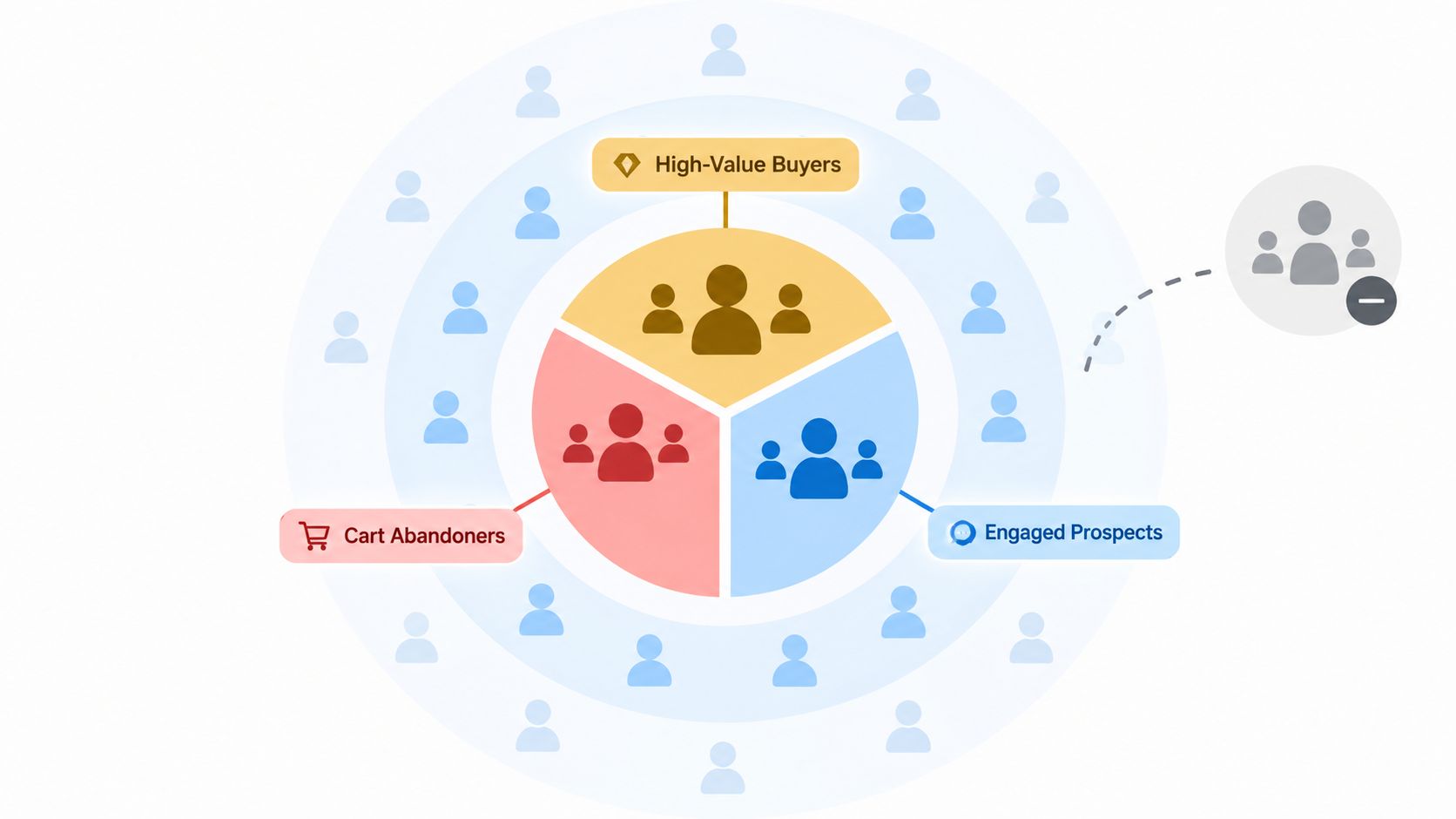
Start with customer cohorts that mean something financially. Separate repeat buyers from one-time purchasers, high-value customers from low-value customers, and engaged prospects from people who only landed on a page by accident. A lookalike built from a valuable customer cohort can be more useful than one built from every historical lead, provided the source is large enough and refreshed.
The temptation is to stack every interest, behavior, exclusion, and audience layer available. That often produces a tiny audience and a large spreadsheet. Meta's delivery system needs room to learn, while the business needs enough reach to discover adjacent buyers.
Meta's history explains why this balance matters. Facebook introduced Custom Audiences in 2013, Lookalike Audiences in 2015, integrated Instagram ads into Ads Manager in 2016, and changed the Facebook Ads name to Meta Ads in 2021, according to the Meta ads benchmark timeline. Best practices moved from demographic selection toward first-party signals, cross-platform delivery, and automated optimization.
A capable hire won't defend an audience structure because it looks intricate. They'll explain which cohort feeds it, what gets excluded, what success means, and when the source will be refreshed. Complexity is not a strategy. Sometimes it's just a very tidy way to hide uncertainty.
Retargeting fails when every visitor receives the same ad until they either buy or develop a personal grudge against your brand. Intent changes as someone moves from product view to cart to checkout. Your message should change with it.
A product viewer may need education, proof, or a clearer explanation of the offer. A cart abandoner may need reassurance about delivery, returns, or payment. A recent purchaser needs a useful follow-up, not another invitation to buy the item already sitting in their kitchen.
Build the sequence around behavior. Dynamic product retargeting can show the exact product a visitor viewed, while exclusions prevent recent purchasers from consuming acquisition budget. The sequence should move people forward rather than loop them back to the beginning.
Frequency deserves attention, but don't mistake a platform setting for a strategy. Monitor repeated exposure, declining click quality, negative feedback, and rising acquisition costs. If the same creative keeps serving to a small warm pool, the campaign may be buying annoyance rather than demand.
The hiring test is straightforward. Ask a candidate to draw the audience flow from first visit through purchase and post-purchase. A strong operator will include exclusions, message progression, and a reason for each transition. A weak one will show you a retargeting ad and call it a funnel.
The ad gets the click. The landing page earns or loses the conversion.
Message mismatch is one of the most expensive forms of false optimism in paid media. If an ad promises a free trial and sends visitors to a generic homepage, the campaign has created friction before the buyer has done anything wrong. If an ad features a specific product, the destination should make that product easy to recognize and evaluate.
Use a written UTM convention across campaigns, ad sets, and creative variants. A practical structure might distinguish source, medium, campaign, and content, while keeping names readable enough for sales and finance teams. Consistency matters more than cleverness. One typo can split reporting into two fake campaigns, which is a remarkably efficient way to waste a meeting.
Landing-page QA should happen before traffic launches, not after a week of blaming the audience. HireMediaBuyers.com's media buying service describes the kind of operational discipline worth looking for, including tracking setup, landing-page QA, naming hygiene, and creative planning.
A good media buyer asks for access to the page, analytics, CRM, and thank-you flow. They don't treat the website as someone else's problem. The click is only the handoff.
Creative testing isn't a ceremony where a team uploads a pile of ads and waits for a winner to emerge wearing a tiny crown. It's a controlled learning process that connects a hook, message, format, audience context, and conversion event.
Dynamic Asset Optimization can help Meta distribute combinations of headlines, descriptions, images, and videos. That makes it useful for discovering patterns, but it doesn't remove the need for judgment. A winning combination may reflect a strong message, a favorable placement, a low-quality conversion, or a temporary delivery pocket. Read the breakdowns before declaring a creative law.
Start with purposeful variation. Test different problems, proof points, demonstrations, objections, and calls to action. Then isolate meaningful changes. Changing the hook and offer and landing page at once may produce a result, but it won't tell you why.
Meta's current automation favors a healthy supply of relevant creative, but more assets aren't automatically better. The hiring signal is a buyer who can explain the hypothesis behind every variation and connect creative results to downstream value. “We need more videos” is not a test plan. It's a shopping list.
Bid strategy should follow the business constraint. A campaign trying to discover buyers, a mature campaign protecting acquisition cost, and a value-optimization campaign should not be managed as if they have identical jobs.
Meta's learning phase occurs at the ad-set level. Meta says the system needs roughly 50 optimization events within a 7-day window to stabilize, and it warns that edits, too many ads, and budget changes can send an ad set back into learning, according to Meta's learning-phase guidance. That makes budget pacing a discipline, not a daily reflex.
For a new campaign, lowest-cost delivery can provide room for exploration. More controlled strategies may make sense once the account has stable signals and a defensible cost target. Value optimization is attractive when revenue quality varies, but it needs trustworthy values and enough patience to learn. A campaign can't optimize for profit if the account only reports clicks and generic conversions.
The hiring signal is someone who can explain why a bid strategy fits the funnel and what evidence would justify changing it. If they adjust bids every morning without a written trigger, they're probably managing anxiety, not delivery.
Scaling a winning campaign changes the conditions that made it work. More spend can increase reach, expose weaker pockets of an audience, raise frequency, and alter the mix of placements. The campaign that performed beautifully at a restrained budget may become a very expensive way to learn that audiences have edges.
Scale methodically. Increase budget in controlled steps, observe efficiency, and identify the point where performance changes. Don't confuse a temporary fluctuation with a saturation problem, but don't keep increasing spend while the account is clearly walking toward an efficiency cliff.
Meta recommends Advantage+ placements because the system can place ads where customers spend time and try to make the most of the budget, as explained in Meta's Advantage+ placements guidance. That recommendation doesn't mean every placement deserves unquestioned trust. It means start with broad delivery, then use evidence to identify quality problems rather than excluding placements by habit.
A good media buyer keeps a scaling playbook with decision triggers, audience preparation, creative supply, and reporting definitions. A weak one calls doubling spend “aggressive growth” and discovers the cliff after the invoice arrives.
Peak-season performance is usually decided before the peak. If the team waits until demand spikes to create audiences, approve creative, check tracking, and settle the offer, the algorithm gets a cold start precisely when every competitor is demanding attention.
Plan backward from the commercial moment. Build the creative calendar, confirm inventory and margins, prepare audiences, review last season's delivery patterns, and decide which campaigns are for discovery versus conversion. The forecast doesn't need to be perfect. It needs to expose assumptions early enough to challenge them.
Budget planning should also account for uncertainty. Reserve room for an unexpected opportunity, a creative winner, a stock issue, or a campaign that looks fine in Ads Manager but produces poor-quality customers. “We'll see how it goes” is not forecasting. It's a weather report written after the storm.
Seasonal hiring should favor operators who ask about margins, stock, sales capacity, and customer support, not only last year's ROAS. A campaign can be technically profitable and operationally disastrous if the business can't fulfill what the ads sell.
Attribution shows which conversions Meta can connect to ads. Incrementality tests a harder question: what would have happened without the ads?
The distinction matters in retargeting and branded demand, where people may already be close to buying. Reported ROAS can look strong while the campaign adds little incremental revenue if it mainly reaches buyers who were already likely to convert. Treat the result as a measurement problem, not a reason to dismiss every platform report.
Use Meta's Conversion Lift Studies when available. Geographic or audience-based holdouts can also fit the business, provided the design matches its sales cycle and operating conditions. Define the control group before launch, monitor whether people in it receive the same message elsewhere, and document the measurement period. Contamination makes the comparison harder to trust. A long sales cycle also requires enough time for delayed conversions to appear.
Incrementality testing guidance helps teams frame the experiment around budget decisions rather than attractive reporting.
The hiring signal is clear. A capable media buyer welcomes a holdout and can explain its limits, contamination risks, and decision rule. A dashboard full of green arrows is easy to produce. Explaining what the ads caused requires a better operator.
| Item | Implementation complexity | Resource requirements | Expected outcomes | Ideal use cases | Key advantages |
|---|---|---|---|---|---|
| Conversion API and First‑Party Data Integration | High, server‑side setup and ongoing maintenance | Engineers, backend/CRM/POS access, privacy/compliance processes | More accurate conversion data, improved revenue/LTV optimization, higher ROAS | E‑commerce, SaaS, B2B, businesses with offline/CRM data | Server‑side tracking bypasses browser limits; sends revenue & custom params for better matching |
| Conversion Windows and Attribution Modeling | Low–Medium, configuration and testing effort | Analytics, historical data, time for experiments, possible lift studies | Cleaner attribution, aligned optimization, better budget allocation | Long sales cycles, businesses needing accurate ROAS (B2B, luxury e‑comm) | Prevents false attribution; matches metrics to customer journey |
| Audience Segmentation and Custom Lookalike Layering | Medium, data prep and segmentation rules | Clean first‑party lists (≥1k), segmentation tools, regular refresh | Higher relevance and CTR, lower CAC, improved prospecting ROAS | Brands with customer lists, repeat buyers, SaaS vertical segmentation | Targets high‑value cohorts; finds similar high‑quality prospects |
| Retargeting Sequencing and Funnel‑Based Audiences | Medium, audience logic and sequential creatives | Pixel/CAPI events, dynamic creative assets, audience lists | Much higher ROAS from warm traffic, lower CAC, improved conversion rates | Cart abandoners, trial users, post‑purchase lifecycle flows | Tailored messaging per funnel stage; dynamic product retargeting |
| Landing Page Optimization and UTM Tracking Discipline | Medium, design, copy testing, tagging governance | Designers, copywriters, QA, UTM conventions and analytics | Higher conversion rates (20–50%), cleaner attribution and insights | Campaigns driving conversions, high‑spend tests, lead gen pages | Message match improves conversions; disciplined UTM enables actionable reporting |
| Creative Testing and Dynamic Asset Optimization (DAA) | Low–Medium, asset setup and DAA configuration | Large creative library, budget for learning, analytics to interpret results | Data‑driven creative winners, faster scaling, better engagement | Large audiences, brands testing many creatives, performance‑driven campaigns | Algorithmic asset combinations reveal top performers and reduce manual guesswork |
| Bid Strategy Optimization and Budget Pacing | Medium, strategy selection and pacing rules | Sufficient conversions (50–100+/wk), flexible budget, monitoring | Improved efficiency/ROAS, predictable CPA control, smoother scaling | Scaling campaigns, funnel stage alignment, revenue‑focused programs | Aligns bidding to goals (volume, cost, value); enables CBO automation |
| Audience Scaling Strategy and Bid‑Based Performance Tiers | Medium–High, disciplined playbooks and monitoring | Scaling playbooks, lookalike pipelines, bid controls, ongoing analysis | Revenue growth with controlled efficiency decline; reduced saturation risk | Campaigns ready to scale, agency portfolios, high‑volume advertisers | Methodical scaling, saturation detection, tiered budget allocation |
| Seasonal Campaign Planning and Audience Forecasting | Medium, advance planning, forecasting and asset production | Historical data, creative calendar (60–90 days), budget contingencies | Better peak performance, warmed audiences, fewer cold‑start issues | Holiday retail, back‑to‑school, seasonal product cycles | Front‑loads audience/building and creative readiness; anticipates CPM changes |
| Incrementality Testing and Holdout Groups | High, experimental design and statistical rigor | Large sample sizes (10k+), time (2–4 weeks), data science/analytics | True causal measurement of ad impact, informed budget reallocation | Large accounts questioning attribution, teams wanting causal ROI insight | Reveals real incrementality vs. attributed conversions; prevents wasted spend on cannibalization |
Strong Meta Ads performance is a system, not a lucky campaign. The system starts with event quality, first-party data, sensible conversion definitions, and a landing page that fulfills the promise made in the ad. Without those pieces, creative reports and ROAS targets become polished guesses.
Run the account on an operating rhythm. Verify event delivery and deduplication. Audit audiences, exclusions, and customer-list freshness. Review creative fatigue by placement and downstream quality, not just cheap clicks. Compare results using a consistent attribution window, and document changes so the team can tell a real improvement from a reporting artifact.
The learning phase deserves respect. Meta says ad sets need roughly 50 optimization events over 7 days to stabilize, and major edits can return them to learning, as outlined in its official learning-phase documentation. That doesn't mean you should ignore obvious problems. It means you should stop making random daily edits and then complain that the algorithm never learns. The algorithm isn't the only one with commitment issues.
Use Advantage+ placements as a starting point, but inspect placement quality. Test broad and layered audiences according to signal strength and business context. Automation can improve delivery when the account supplies clean, stable conversion data. It can struggle with smaller accounts, longer sales cycles, and high-consideration offers that don't generate enough reliable events. The best practice is not “always broad” or “always manual.” It's choosing the level of control the account can support.
Creative deserves the same discipline. Preserve useful winners, test meaningful variations, and connect hooks and formats to qualified outcomes. Meta's current benchmark data shows why attention alone isn't enough. A 2.39% median CTR can coexist with a $38.99 median CPA, while a 1.88 median ROAS and 1.53% median CVR reinforce the need to manage the full path from impression to revenue, as reported by Triple Whale's benchmark analysis. Don't celebrate the click if the business can't profit from the customer behind it.
Finally, judge the person managing the account by their operating habits. Do they ask for CRM access? Do they define decision triggers? Can they explain what changed, what didn't, and what the data can't prove? For companies that need experienced execution, HireMediaBuyers.com is one option for finding pre-vetted Meta Ads specialists. The right hire should fit the account's measurement maturity, funnel complexity, creative demands, and need for hands-on optimization.
HireMediaBuyers.com connects companies with pre-vetted Media Buyers and Paid Ads Specialists who can handle the tracking, audience, creative, testing, and scaling decisions covered here. Visit HireMediaBuyers.com to find Meta Ads talent for full-time or part-time remote work, and bring in an operator who can improve the system before asking you to spend more.


