


Most advice about case studies is wrong.
People talk about them like they're polite little trust badges. Nice to have. Good for credibility. Tuck one on the site, maybe in a dusty “Resources” tab, and call it a day. That's how you end up with a lifeless PDF nobody reads, including your own sales team.
A strong case study is not a brochure with better manners. It's a revenue asset. It gives buyers proof they can picture, language they can repeat internally, and a reason to stop comparing you to three cheaper options who all claim they're “results-driven.” Cute phrase. Means nothing.
I've seen case studies flop because they were written like legal disclaimers wearing a blazer. I've also seen one sharp customer story do more heavy lifting than a month of ad copy, homepage tweaks, and “brand storytelling” workshops. Toot, toot.
Let's be honest. Most business case studies are digital wallpaper.
They're stuffed with throat-clearing intros, corporate adjectives, and quotes that sound like they were approved by six stakeholders and a frightened paralegal. They say things like “we partnered to achieve synergies.” Nobody talks like that. What's more, nobody buys because of that.
The usual advice says case studies build trust. Sure. But that framing is too small. A boring case study is a trust asset at best. A sharp one is a sales argument with receipts.
Teams often make three mistakes:
That last one matters. A case study's strengths emerge when it explains how people made decisions in real conditions, not when it turns into a polished brag sheet.
Case studies earn their keep when a prospect reads one and thinks, “That's my problem, my team, my mess.”
A good case study doesn't just make you look competent. It helps a buyer justify action. That means it needs friction, specifics, and a believable path from pain to progress.
Stop treating case studies like a marketing chore. Treat them like field evidence.
If your paid social campaign, SEO program, or product rollout worked, document the situation in plain English. Show the before. Show the decision. Show what changed. Then hand that story to sales, email, paid traffic, and anyone trying to win budget without sounding like they're making things up over lunch.
Because most case studies are boring for one simple reason. They're written to exist, not to persuade.
Forget the textbook version for a second. In business, a case study is a structured success story built to answer a buyer's most important question.
Will this work for someone like me?
That's it. That's the whole game.
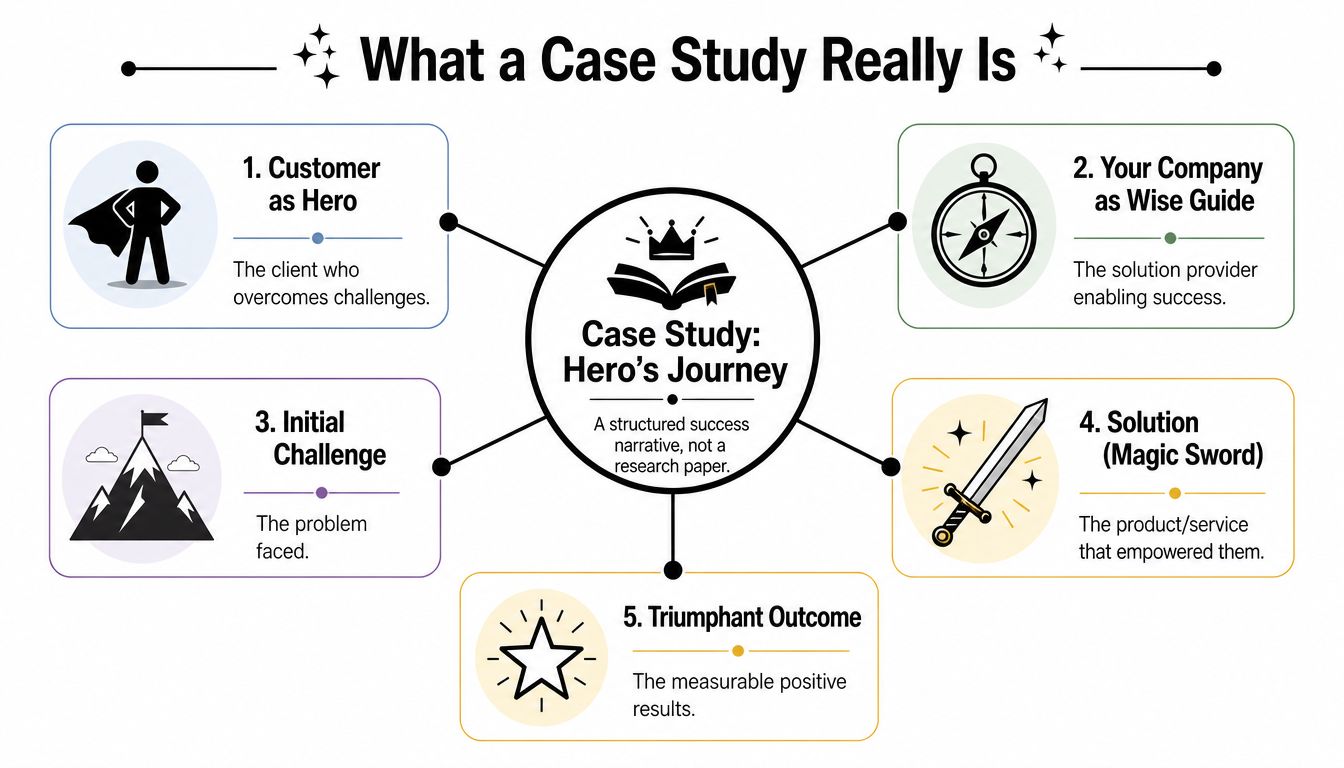
Your customer had a problem. Usually an expensive one, an annoying one, or the kind that made smart people in Slack type “any updates?” a little too often.
Then they found a solution, made a decision, did the work, and got to a better place. In that story, they are the hero. You are not.
You're the guide. The Yoda. The mechanic. The person who handed them the right tool and stopped the metaphorical engine from exploding on the motorway.
A case study that sells usually has these pieces:
A relatable starting point
Who was the customer, and what situation were they in?
A real problem
What was broken, slow, confusing, risky, or underperforming?
A clear intervention
What product, service, or process did they use?
Decision-making logic
Why did that approach make sense for them?
An outcome people can understand
What changed, and why did it matter?
That structure works because it mirrors how buyers think. Not academically. Practically.
A testimonial says, “They were great.” Nice. So does everybody's testimonial page.
A case study goes further. It shows the moving parts inside a result. That matters because, as Study.com's overview of case study design explains, a primary advantage of the case study method is its exceptional ability to “close in” on real-life situations and test views directly as they unfold in practice, producing detailed, relevant data across multiple variables.
That's exactly why this format works in marketing. Buyers don't make decisions in a vacuum. They make them in messy contexts, with constraints, personalities, timing issues, and competing priorities.
Practical rule: If your case study could be swapped with a competitor's logo and still read the same, it isn't a case study. It's wallpaper.
The best ones feel real because they are real. They don't flatten complexity. They organize it into a story a skeptical buyer can believe.
Nobody buys because you “have case studies.”
They buy because a case study makes the risk feel manageable.
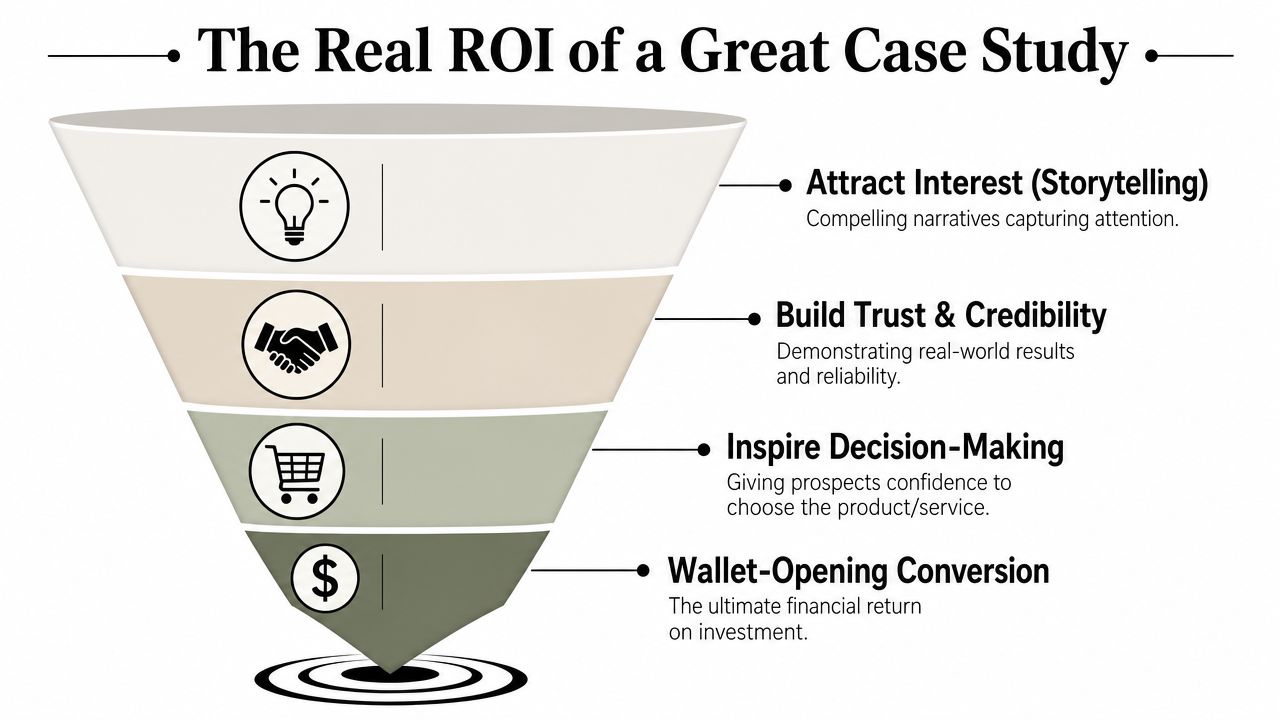
That's the actual ROI. Not vanity. Not content volume. Not a warm fuzzy feeling in the brand team. A great case study shortens the distance between interest and conviction.
Marketing teams love promises. Faster growth. Better targeting. Cleaner reporting. Buyers have heard it all.
Case studies work because they move the conversation from promise to proof. And the most useful ones don't just show what happened. They show how, what, and why. That's one of the strongest advantages of a case study. As this analysis of case study design in complex real-life settings notes, case studies capture causal mechanisms in real contexts and help uncover gaps that large-scale surveys often miss.
Translated into business English, not research-speak. A good case study explains why the result happened, not just that it did.
A decent salesperson with a sharp case study is dangerous in the best way.
Why? Because stories travel inside organizations better than feature lists. A buyer reads the case study, forwards it to a colleague, then repeats the gist in a budget meeting. Your argument survives the handoff.
That's rare. Most marketing assets collapse the second someone has to explain them from memory.
Here's how a case study usually creates business value:
| Stage | What the buyer gets | What you get |
|---|---|---|
| Early interest | A story that feels relevant | More qualified attention |
| Mid-funnel review | Proof grounded in reality | More trust |
| Decision stage | A lower-perceived risk | Better conversion conditions |
| Internal buy-in | Language to defend the purchase | Smoother deals |
Case studies also earn their keep when you place them where friction happens. On landing pages. In nurture emails. In sales follow-ups. Next to a demo form. Inside proposal decks.
If you're already measuring form fills, call bookings, and revenue events, pair those pages with buyer-relevant stories and watch what happens qualitatively. And if your attribution setup is still held together by optimism and screenshots, clean that up first with a proper conversion tracking framework.
The best case study is often the one that answers the objection a prospect hasn't said out loud yet.
Most content teams frame case studies as bottom-shelf social proof. That's underselling them.
Used properly, they shape demand before the sales call, support decisions during the sales call, and reduce buyer nerves after the sales call. That makes them one of the few assets that can influence the whole funnel without turning into generic mush.
That's why I'm biased here. Rightly so. A great case study doesn't sit on your site looking respectable. It helps somebody spend money with less hesitation.
A case study should not live and die as a website page.
If that's all it does, you've built a nice little museum exhibit. Lovely. Quiet. Useless.
The strongest advantages of a case study show up when you treat it like a multi-use operating asset. One customer story can sharpen sales calls, support SEO, shape messaging, and reveal angles your team hadn't even considered.
Sales teams don't need more vague collateral. They need ammo.
A case study gives them a reasoned answer to the questions buyers ask. Have you solved this for a company like ours? What changed? What did the rollout look like? What happened after implementation?
Used well, the same story can become:
That portability matters. The story does work even when your salesperson isn't in the room.
Teams chasing SEO case studies frequently make a predictable mess. They publish a page called “How We Helped a Client Succeed” and wonder why Google yawns.
Case studies can pull in highly relevant searchers when they're built around real problems, industries, and buying contexts. If you want those pages to rank for terms people search, use a sane process for choosing keywords for SEO instead of jamming “best solutions” into every heading like it's 2011.
A good case study page can target intent-rich searches because it contains the language buyers use in the wild. Their problem. Their environment. Their constraints.
This part gets overlooked all the time.
Case studies aren't just persuasive. They're also useful because they uncover things your team didn't know to ask in advance. As this discussion of hypothesis generation in case study research points out, case studies are primarily hypothesis-generating tools. Their inductive nature helps surface unanticipated variables, which makes them a strong first step for broader marketing strategies.
That means a strong customer story can expose:
Good case studies don't just help you sell the current offer. They help you refine the next campaign.
That's why the smart move isn't “publish and forget.” It's publish, repurpose, then mine the story for messaging ideas your ad team, content team, and sales team can all use.
Not every case study needs a film crew, drone shots, and cinematic piano music.
Sometimes a clean written story beats a glossy video that says very little. Sometimes a single-slide summary closes the deal faster than a seven-minute customer interview. The format should fit the job, not your creative director's mood.
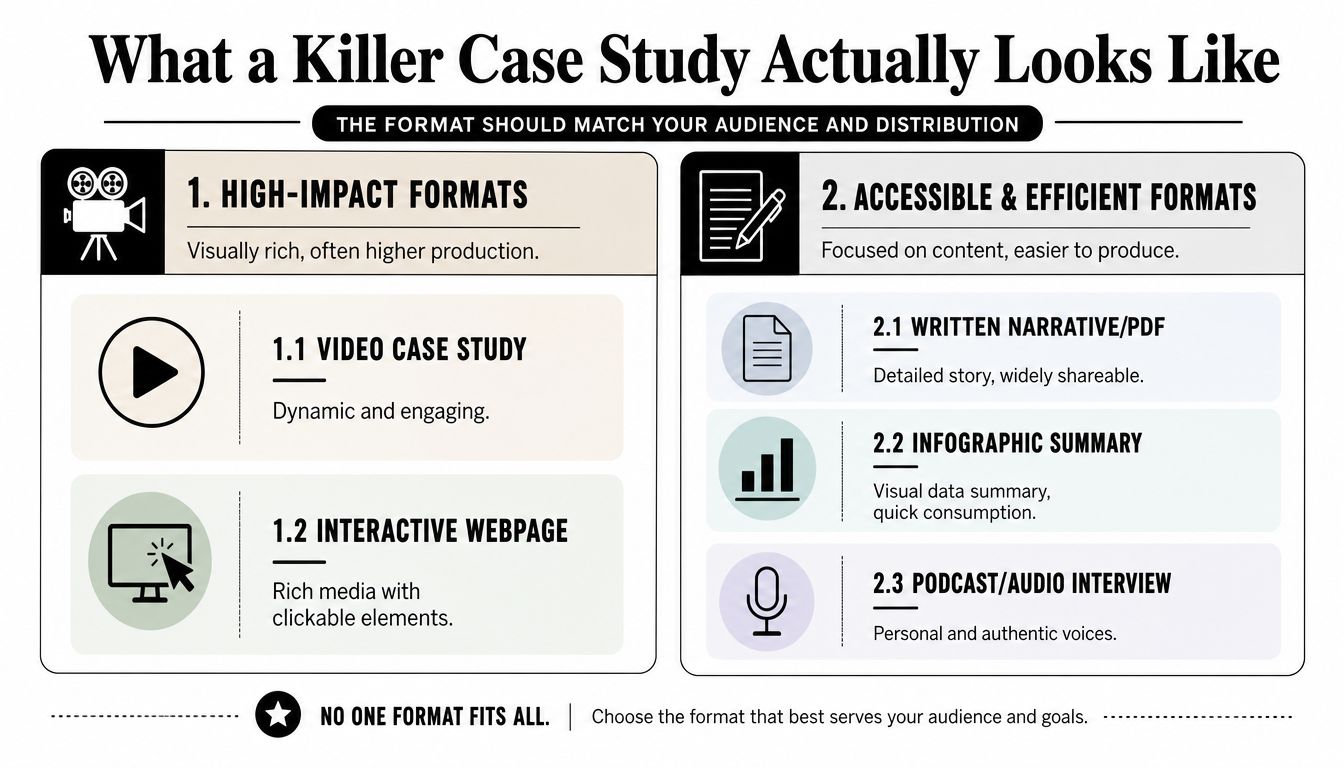
Here's the blunt version:
| Format | Best use | Watch-out |
|---|---|---|
| PDF or written narrative | Sales leave-behind, proposals, email follow-up | Dies fast if it's text-heavy and smug |
| Blog post case study | SEO, organic discovery, educational content | Needs a clear structure or readers bounce |
| Video case study | Homepage, paid traffic, emotional trust-building | Expensive if you overproduce it |
| One-slide summary | Pitch decks, quick objections, executive review | Too thin for complex buying decisions |
| Audio or interview-style content | Founder-led brands, relationship-heavy sales | Easy to ramble if not edited hard |
The classic written case study still works. Keep it visual. Use screenshots, pull quotes, and short sections. Nobody wants a six-page grey slab of text masquerading as thought leadership.
The blog-post breakdown is ideal when the buyer needs to understand process. This is especially useful when context matters. In usability work, for example, Trymata's write-up on case study advantages notes that case studies can uncover unexpected user pain points and preferences by capturing real-world context, leading to improvements grounded in how people use a product.
That same logic applies in marketing. The more context affects the result, the more a blog-style case study earns its keep.
The one-slide miracle is the unsung hero. One problem. One approach. One clear outcome. No fluff. It's perfect for decks when the room is impatient and half the attendees joined late because, apparently, calendars are just decorative now.
For a solid example of a customer story shaped around audience fit, look at this EcoWave case study on reaching the right audience.
A killer case study is easy to skim, easy to retell, and hard to dismiss.
It should feel concrete. Human. Credible.
Not polished to the point of sterility. Not crammed with jargon to impress people who already know better. If the story sounds like it was written by committee, it's already lost half its power.
The hard part isn't knowing that case studies matter. The hard part is producing one without turning the process into a slow corporate hostage situation.
So keep it simple. Pick a strong customer, make participation easy, and build the story around decisions and outcomes, not compliments.
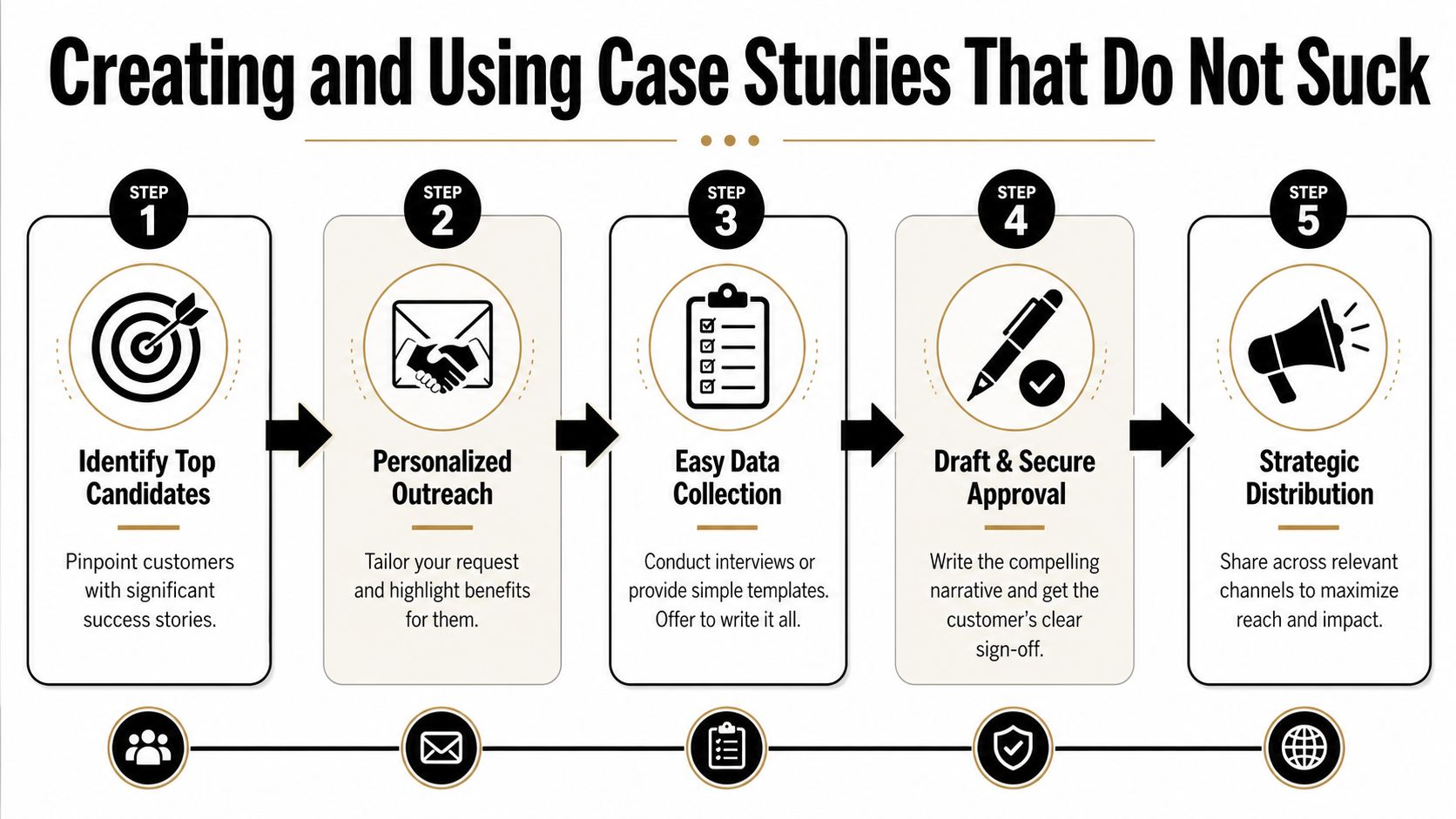
Don't begin with the biggest logo. Begin with the clearest story.
You want a customer who can explain the pain, the turning point, and the result without sounding like they're reading from a board memo. The best candidates are usually people who are already happy, responsive, and specific.
When you reach out, don't send a vague “would you like to be featured?” email. Offer to do the heavy lifting.
Most interviews fail because the questions are terrible.
Don't ask, “How was your experience working with us?” That invites a bland compliment and a waste of everybody's calendar. Ask what forced the search in the first place. Ask what alternatives they considered. Ask what changed in their process, confidence, or decision-making once the solution was in place.
Try prompts like these:
The deeper advantages of a case study extend beyond marketing. As this explanation of single-subject case study value notes, intensive case studies can support the development of new techniques or theories by illustrating complex behaviors that would be unethical or impractical to study through randomized controlled trials. In plain terms, one well-documented customer experience can reveal patterns worth testing elsewhere.
Publishing the story is the midpoint, not the finish line.
Use the case study on your homepage. Add it to nurture emails. Turn the strongest quote into LinkedIn posts. Pull a one-slide version into sales decks. Build snippets for ad creative. Hand the full version to account managers so they can reinforce renewals and upsells.
“One good case study should spawn a month of useful sales and marketing material.”
If you create a strong story and then hide it in a forgotten resource library, that's not strategy. That's admin.
The biggest advantages of a case study are not about seeming advanced. They help buyers believe you, help sales explain you, and help your team understand what works in the wild.
So stop waiting until you have a perfect content calendar, a fancy video budget, or a “formal customer advocacy program.” That's procrastination wearing a lanyard.
Pick one customer. Just one. Someone with a real before-and-after story. Send a personal email. Offer to draft the piece for them. Ask smart questions. Publish the story where buyers can find it.
One sharp case study beats a library of forgettable ones every time.
If you need people who can turn marketing evidence into actual revenue, HireMediaBuyers.com helps brands and agencies find pre-vetted media buyers and paid ads specialists without the usual hiring circus. It's a practical shortcut when you need operators who can test, track, optimize, and scale. Not just talk a good game on Zoom.


