


You're probably in one of two moods right now.
Either you've already spent money on TikTok ads, watched a few videos get likes, and then discovered likes don't pay invoices. Or you haven't launched yet, and you're staring at Ads Manager wondering why a platform built for dancing, skincare routines, and oddly aggressive kitchen gadgets now expects you to run a serious acquisition machine.
Both are normal.
TikTok ads can feel like a casino built by product managers. You fund the account, upload a video, toggle a few settings, and hope the algorithm blesses you before finance asks what exactly happened to the budget. I've been there. Plenty of founders have. The painful part is that TikTok absolutely can work. The more painful part is that most brands approach it like it's just another paid social channel. It isn't.
A founder launches a few ads on Friday. By Monday, one video has decent engagement, another has gone nowhere, and the sales report looks like it was assembled by a prankster. TikTok says one thing. Shopify says another. The creative team says the ad “felt native.” The CFO says “felt native” isn't a metric. Everyone is technically correct, which is the problem.
That's why fluffy advice on TikTok is so useless. “Be authentic.” “Follow trends.” “Use a hook.” Thanks. Very helpful. Next you'll tell me water is wet and budgets are finite.
The reason founders keep coming back anyway is simple. The audience is too large to ignore. TikTok's advertising reach expanded to approximately 1.99 billion adults aged 18 and above as of October 2025, accounting for roughly 25% of the world's adult population, which makes it the fourth-largest platform by ad reach globally according to this October 2025 TikTok advertising reach analysis.
That's not a side channel. That's a real media environment.
TikTok punishes half-commitment. It wants fast creative iteration, sharp messaging, clean tracking, and enough operational discipline to keep campaigns stable. Most founders bring one of those four. Then they wonder why performance swings like a ceiling fan.
The platform also tricks smart people into making dumb decisions. A video gets comments, so you assume the ad is healthy. A low click cost makes you feel clever, so you scale too fast. A creator clip looks “organic,” so you skip the boring parts like landing page alignment and attribution hygiene. That's how budgets disappear.
Good TikTok ads management isn't about posting videos people tolerate. It's about building a system that can survive volatility without setting money on fire.
If you want TikTok to act like a growth channel instead of a roulette wheel, stop treating it like a software tutorial. This is management, not button pushing. Different skill set. Different expectations.
And yes, that changes who should be doing the work.
People say they need help “running TikTok ads.” Usually what they mean is they need help cleaning up a mess created by assuming Ads Manager is the job.
It isn't.
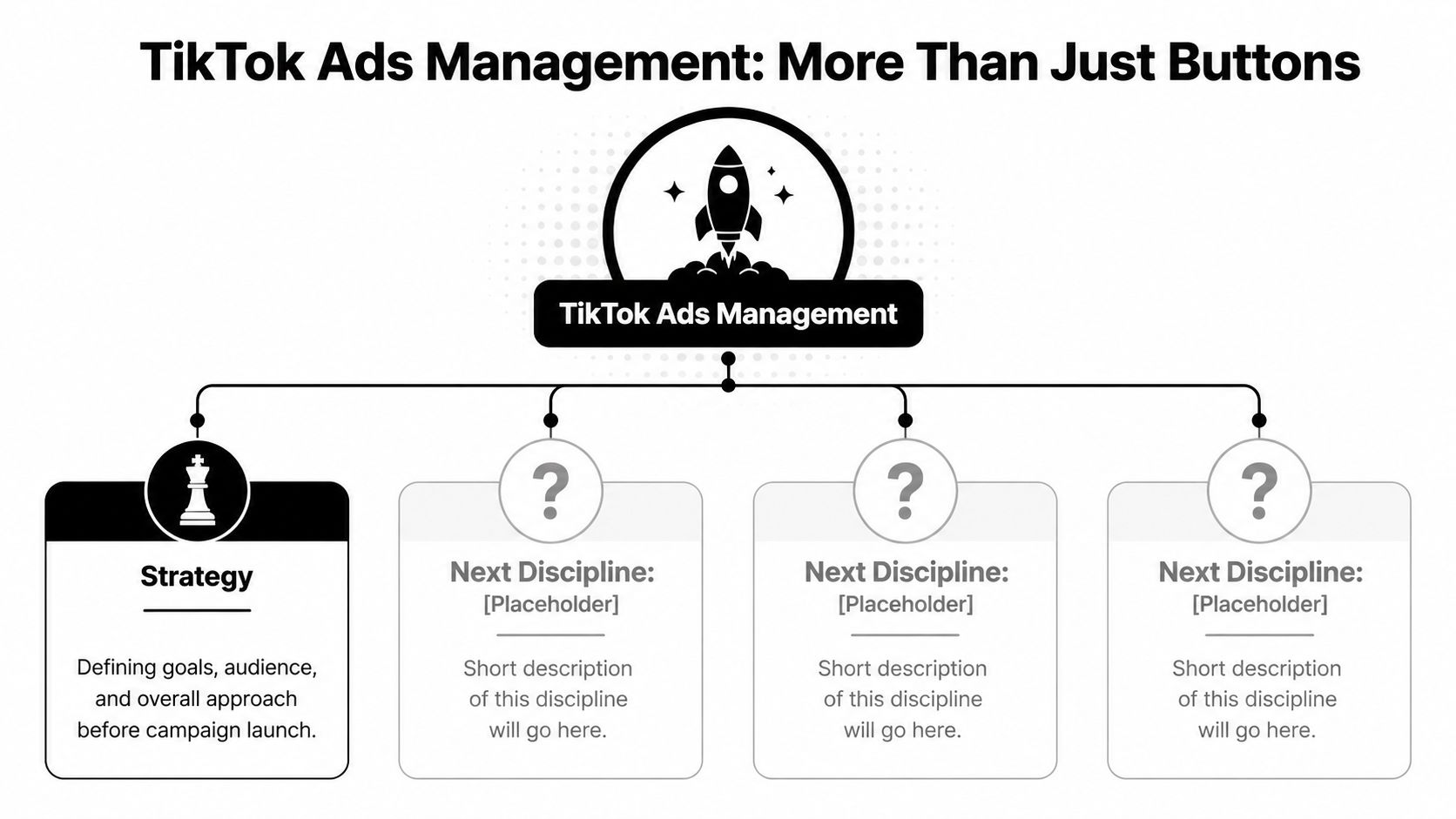
Real TikTok ads management sits on four legs. Strategy, creative, data, and operations. If one leg is weak, the chair collapses and everyone blames the algorithm like it mugged them in a parking lot.
Here's the shape of the work.
One structural quirk catches founders immediately. TikTok separates asset management from campaign execution into two distinct tools with separate logins. Business Center handles pixels and ad accounts, while Ads Manager is where you build campaigns. That split trips people up because they expect one unified dashboard and end up hunting for permissions in the wrong place, as outlined in this TikTok Ads Manager guide from MB Adv.
That sounds minor until your team loses half a day because the media buyer can't access the pixel, the founder owns the account, and nobody remembers which login controls what.
Practical rule: if your account structure is sloppy, your campaign performance data will be sloppy two weeks later.
A good operator on TikTok doesn't just build campaigns. They do things like:
| Discipline | What they own | What bad operators do |
|---|---|---|
| Strategy | Offer, audience, funnel goal | Copy Meta playbooks blindly |
| Creative | Hooks, pacing, native feel, iteration | Recycle brand videos and pray |
| Data | Tracking checks, metric interpretation | Trust one dashboard without verification |
| Operations | Access, workflow, review process | Fix fires after launch |
This is why generic tutorials disappoint serious businesses. They teach where to click, not how to think. Helpful for interns. Not enough for a brand trying to scale profitably.
If one person owns TikTok, that person needs to think like a strategist, a creative director, an analyst, and a traffic manager. If that sounds like several jobs wearing a trench coat, that's because it is.
Most TikTok creative advice is either too vague or too cute. “Make it authentic” is not a creative process. It's a bumper sticker.
Here's the blunt version. If your ad doesn't look native, sound clear, and communicate one obvious benefit fast, it's probably dead. Not morally dead. Financially dead.
Before anything else, get the basics right.
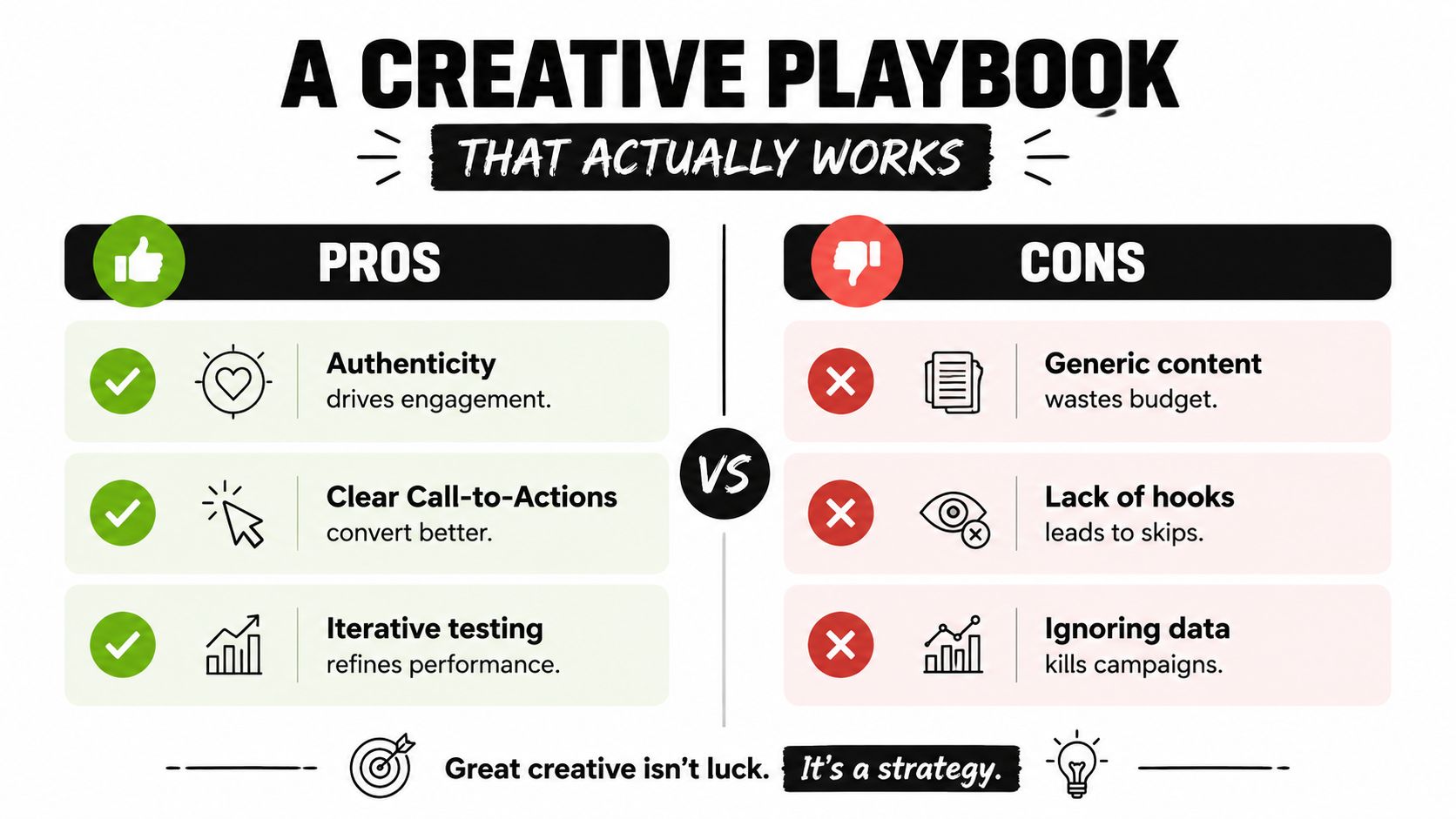
TikTok's In-Feed ad architecture mandates a 9:16 aspect ratio, and performance benchmarks strongly favor 1080×1920px. Ads that fail resolution or bitrate thresholds show 15–20% lower click-through rates due to perceived low quality, based on TikTok ad specs benchmarks from The Wojo Media.
That means blurry exports, lazy crops, and recycled stock footage aren't “good enough for testing.” They're self-sabotage.
If you're running In-Feed ads, my default standard is simple:
When a founder asks me what creative format tends to feel less forced, I usually point them toward creator-led assets and native-looking posts. If you want a better sense of how that style works, this guide on UGC-style ads for paid social is worth a look.
Why? Because TikTok punishes polished corporate energy. The platform likes ads that feel like content and content that behaves like ads. Annoying? Yes. Also true.
Native-looking creative beats “brand safe” creative on TikTok more often than most approval chains want to admit.
Before an ad goes live, ask:
If the answer to two of those is no, rework it. Don't launch and “let the algorithm decide.” The algorithm has enough bad decisions to process already.
Founders love to ask which campaign structure works best. Wrong question.
The better question is this. What are you trying to make happen, for which exact buyer, with which single message? If that answer is fuzzy, the campaign setup won't save you. It'll just make the confusion more expensive.
TikTok's conversion funnel optimization relies on a single-message focus per ad. Multi-benefit messaging can reduce conversion rates by up to 40% because users won't retain several value propositions in such a short attention window, according to this TikTok advertising guide from Improvado.
That should kill the “let's mention all our features” instinct on the spot.
If you sell skincare, don't talk about hydration, anti-aging, texture, glow, ingredients, dermatologist trust, and shipping policy in one ad. Pick one angle. Dry skin relief. That's it.
If you sell B2B software, don't mention automation, visibility, integrations, dashboards, compliance, collaboration, and onboarding in a single video. Pick the pain that gets attention fastest. Then build the ad around that.
The best-performing TikTok ads usually sound narrower than your homepage. That's the point.
TikTok also blocks the fantasy that you can test seriously with spare change. The platform enforces a hard minimum budget. Campaigns require at least $50 daily, and ad groups require at least $20 daily, as noted in this walkthrough of TikTok Ads Manager minimums.
That spend floor changes how you should think. You're not “just trying a few things.” You're making a deliberate bet and buying enough signal to judge it properly.
A lot of founders rush into creative testing while their attribution is still held together with duct tape and good intentions. That's backwards. You can't optimize what you can't trust.
If your event setup is shaky, clean that up first. This walkthrough on conversion tracking for paid media is a useful starting point because it forces you to line up platform data with actual business outcomes instead of feel-good dashboard numbers.
I ask these before any serious spend:
| Question | Why it matters |
|---|---|
| Who is the exact buyer? | Broad targeting won't rescue a vague offer |
| What single problem are we leading with? | One message beats five half-messages |
| What should happen after the click? | A weak destination kills strong ads |
| What budget can we commit without flinching? | TikTok punishes nervous budget management |
Hope is not a strategy. Curiosity is not a strategy either. A clear audience, one sharp claim, proper tracking, and a realistic starting budget. That's a strategy.
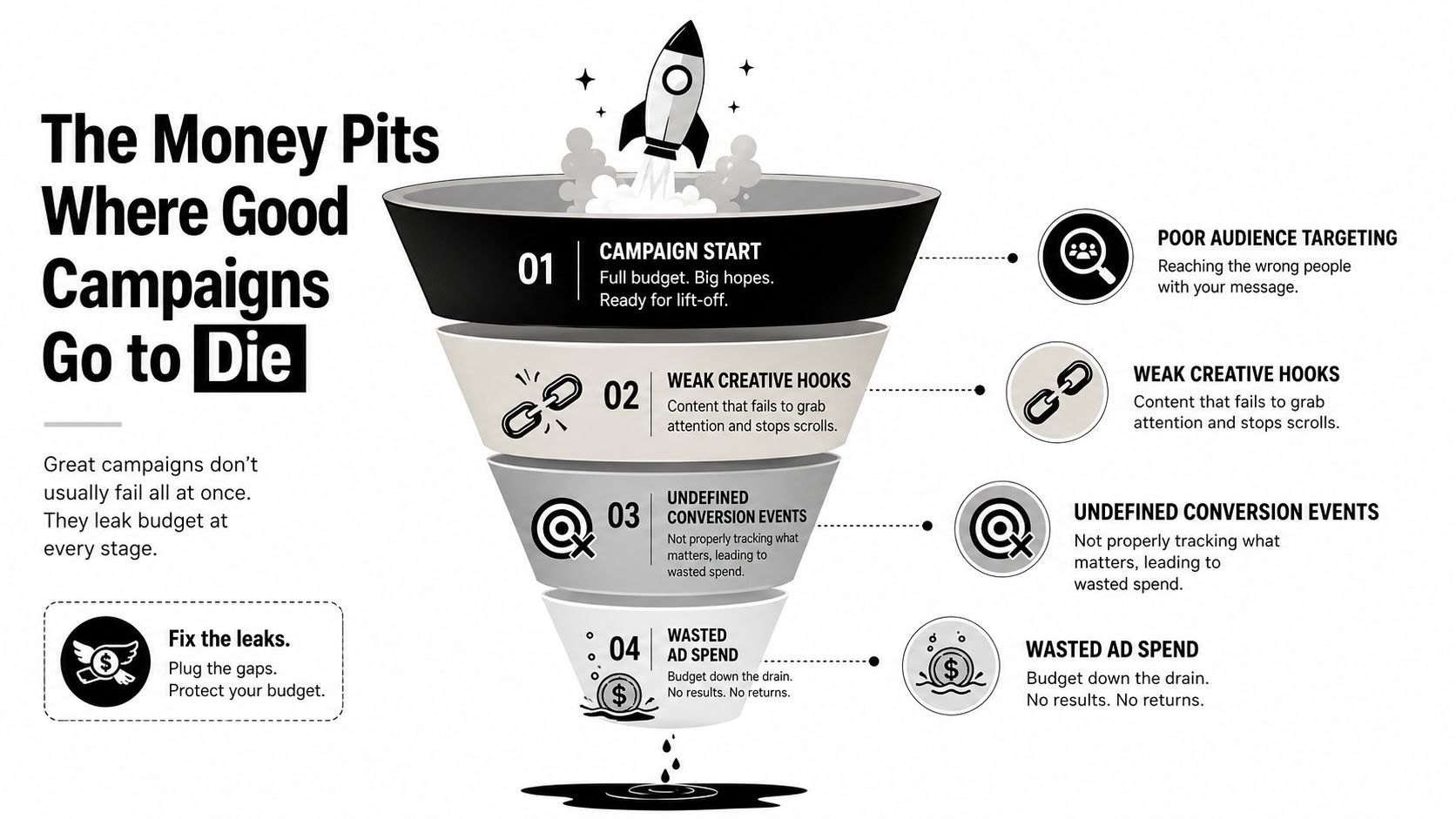
Some TikTok campaigns don't fail because the product is bad or the creative is weak. They fail because the operator makes one “small” decision that detonates the learning process, breaks attribution, or sends the team chasing the wrong signal.
This is the expensive part of TikTok ads management. Not launch. Management.
Here's where good campaigns usually bleed out.
This one catches impatient teams constantly. You find an ad that looks promising, get excited, and jack up the budget because growth waits for no one. Cute idea. Terrible move.
Budget increases exceeding 20% reset the learning phase, which forces the algorithm to re-optimize and can cost 3–5 days of inefficient spend before stability returns, according to this TikTok ads scaling playbook.
That's not a soft suggestion. That's a practical warning.
If a campaign is working, protect the learning phase like it's a grumpy but profitable houseplant.
This one is nastier because it creates false confidence and false panic at the same time.
Most brands eventually discover a gap between TikTok Ads Manager and their actual commerce or analytics stack. TikTok reports one result. Shopify or GA4 reports another. Then the team starts making creative decisions based on whichever dashboard supports their mood that day.
The fix isn't glamorous. It's disciplined attribution work. Use custom UTMs. Cross-check what TikTok says against internal analytics. Don't kill a creative because one dashboard made it look worse than it is. Don't scale a campaign because another dashboard made it look prettier than reality.
TikTok also punishes inconsistency. If your ad says one thing, your thumbnail implies another, and the landing page wanders off into a different promise entirely, the campaign gets weaker fast.
Many “good creatives” die, not because the video failed, but because the click landed on a page that felt like a bait-and-switch designed by committee.
| Money pit | What it looks like in real life | Result |
|---|---|---|
| Budget reset | Aggressive scaling after early wins | Learning phase instability |
| Attribution gap | TikTok and store data don't agree | Bad optimization decisions |
| Message mismatch | Ad promise and landing page differ | Lower conversion efficiency |
| Team confusion | Nobody owns the full picture | Slow fixes and repeated mistakes |
When TikTok rejects an ad, the platform puts specific rejection details into the Ad Group under Notifications and requires you to amend or recreate the ad before resubmitting. If you think the decision is wrong, you have to file a formal appeal through Advertiser Support, as explained in TikTok's help guidance for ad review and appeals.
That means poor review discipline doesn't just delay launch. It clogs the whole workflow.
Founders often underestimate how much money gets lost in these operational potholes. Not in one dramatic blow. In a hundred “small” mistakes that each seem survivable on their own.
They're survivable. Just not cheap.
At some point, the honest answer is that you shouldn't be the one doing this.
Not because you're incapable. Because your time is too expensive to spend inside dashboards, fixing permissions, auditing hooks, arguing over attribution, and trying to remember whether yesterday's budget edit accidentally poisoned today's results.
So who should own TikTok ads management?
Hiring full-time can work if TikTok is central to growth and you can support the role properly. The upside is focus. The downside is obvious. Recruiting takes time, onboarding takes time, and if you hire a general paid social person who “also does TikTok,” you may get someone who knows the interface but not the channel's quirks.
Then you're back in the weeds.
Agencies can help, especially if you need broader paid media support. But many founders discover the same issue. The person who sold the account isn't the person in the trenches. Strategy gets presented nicely. Execution gets delegated. Creative feedback gets watered down into polite nonsense nobody can act on.
You also inherit layers. Calls, approvals, project management friction, and monthly rituals designed to appear complex while your ads passively drift.
This is usually the sweet spot. A dedicated TikTok media buyer or paid social specialist with real platform experience, solid creative instincts, and enough business judgment to protect budget instead of just spending it.
Why I like this model:
And channel depth matters. In 2026, TikTok Shop Ads delivered an average cost-per-purchase of $7.83, which was 31% lower than comparable Meta Shopping campaigns, and expert media buyers achieved an average 2:1 ROAS, according to these TikTok ads benchmarks compiled by Amra and Elma.
That doesn't mean every specialist is brilliant. Plenty are cowboys with a Canva account and a nice LinkedIn profile photo. It does mean the upside of specialized talent is real.
A mediocre operator buys traffic. A strong operator manages creative, data, budget behavior, and decision timing.
The best hiring choice usually isn't the cheapest on paper. It's the one that lowers your odds of expensive mistakes.
If you need help, don't disappear into a two-week hiring spiral writing a poetic job description nobody qualified will read. Move faster.
This is what I'd do if I needed a TikTok operator in the next day.
Ask the candidate one practical question. “If TikTok performance looked good in-platform but weak in Shopify, what would you check first?” You're not looking for a buzzword recital. You're looking for someone who talks clearly about tracking, UTMs, landing page consistency, and decision discipline.
Then ask about creative. “What makes a TikTok ad die in the first few seconds?” Good candidates won't talk like textbook marketers. They'll talk about hooks, pacing, message clarity, visual fit, and why overproduced assets often miss.
Here's what a fast search process should feel like.
Can they explain audience, offer, funnel stage, and creative angle without hiding behind platform language? If not, pass.
Do they understand account access, tracking setup, rejection handling, and reporting hygiene? This matters more than most interviews reveal.
Can they tell you why one ad works and another doesn't in plain English? If they can't critique creative, they'll become a dashboard tourist.
Will they flag problems early, or only after a week of wasted spend? You want someone who can tell you the truth before the bill arrives.
Hire the person who can prevent bad spend, not just report on it elegantly.
A strong hiring flow for this role should be short:
If your process takes longer than it needs to, you're paying the opportunity cost twice. Once in delayed execution. Once in continued underperformance.
For teams that want to compress the timeline, this overview of a faster paid media hiring timeline is useful because it maps the process around speed and fit instead of resume theater.
The punchline is simple. TikTok ads management is not a side task for a busy founder, a random generalist, or the intern who “gets TikTok.” It's a strategic discipline. Hire accordingly.
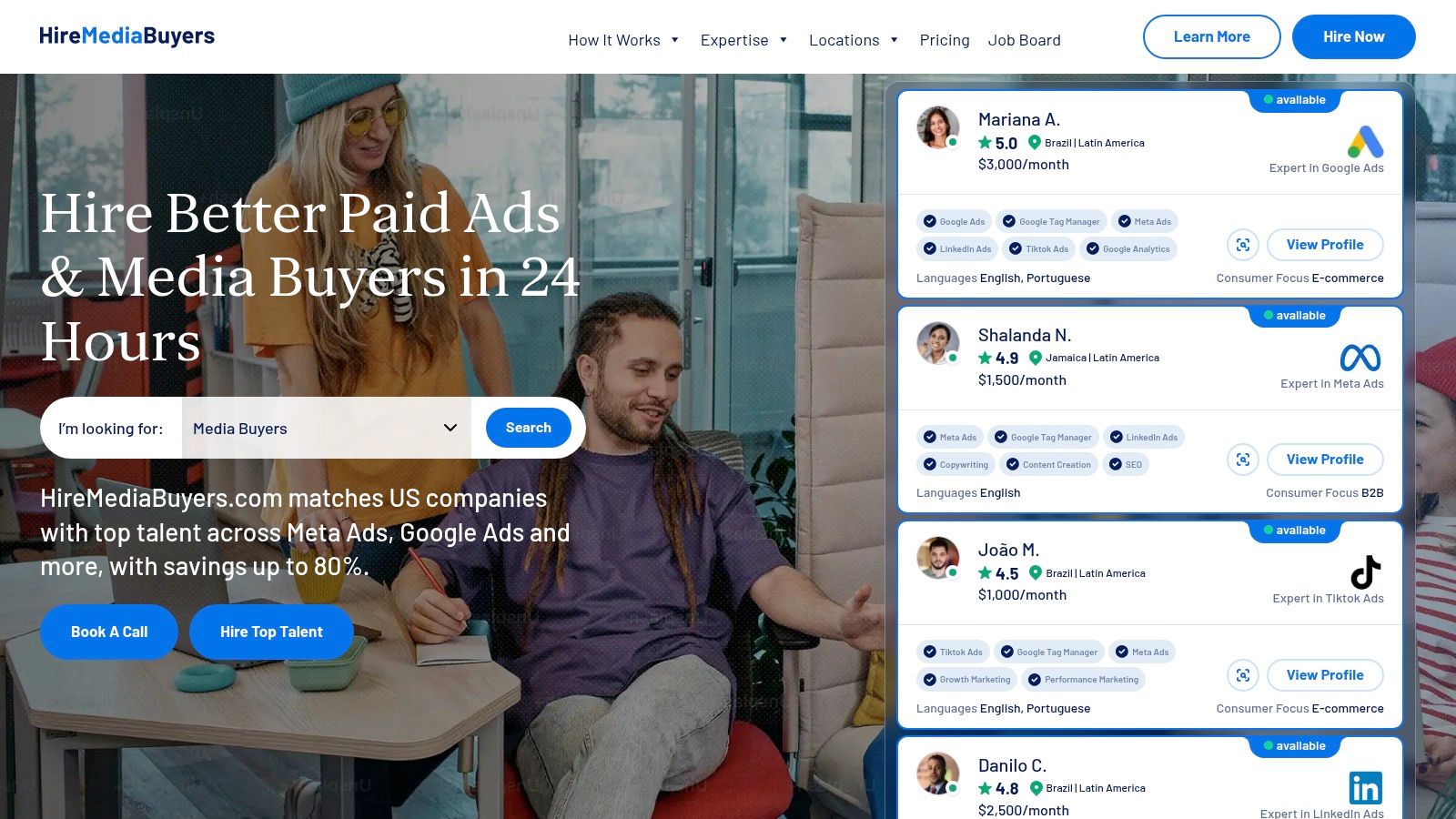
If you want to skip the resume pile and get to vetted talent fast, HireMediaBuyers.com is the practical shortcut. You can find pre-vetted media buyers and paid ads specialists in as little as 24 hours, without turning your week into a hiring project.


