

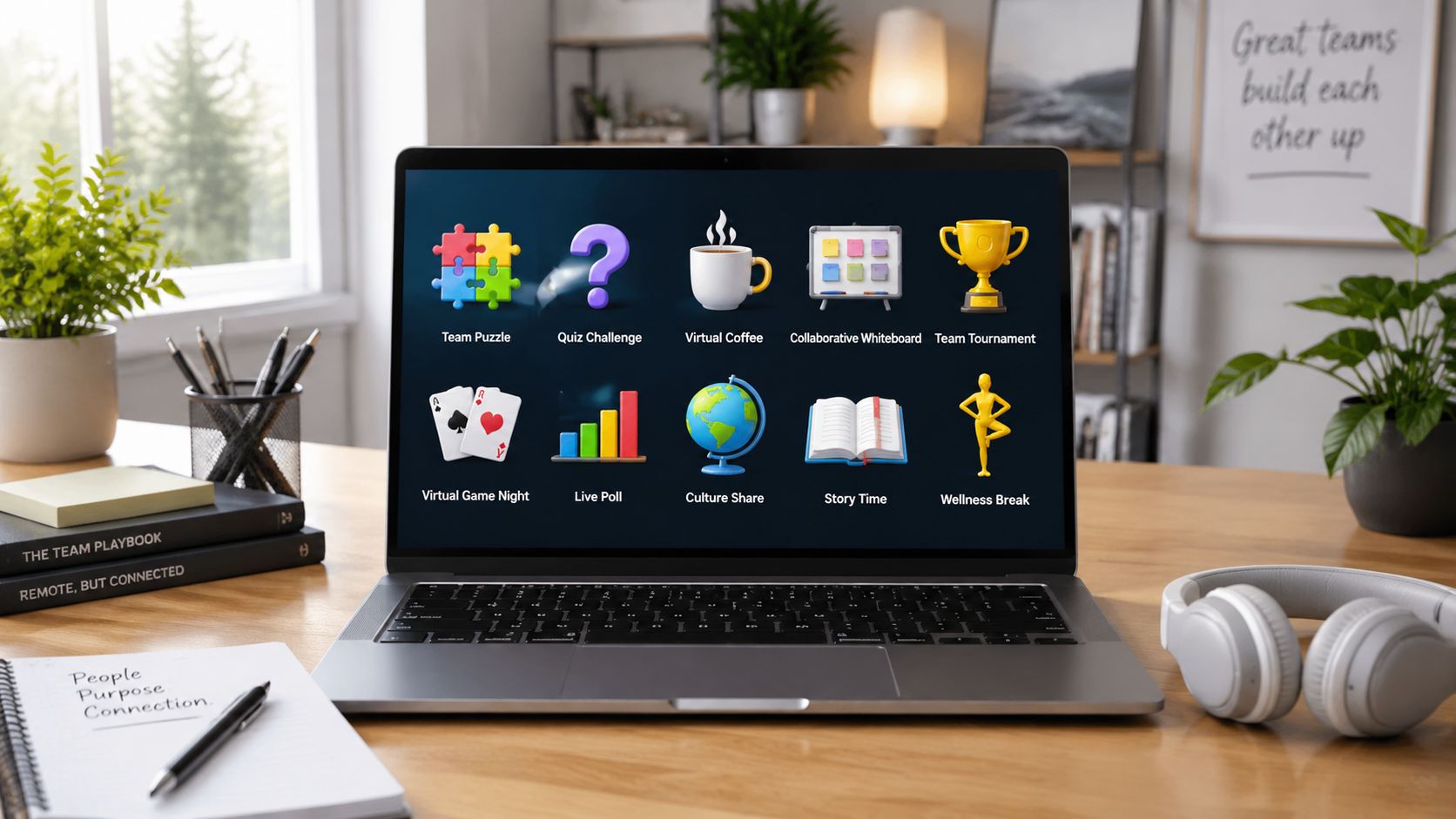
Another Zoom happy hour? No thanks.
Most virtual employee engagement activities are junk food. Sugary, loud, and weirdly exhausting. They give leaders the comforting illusion that they're “doing culture” while everyone else checks Slack under the table and wonders how this became their Tuesday.
I've seen the usual parade. Trivia nobody asked for. Icebreakers that feel like corporate hostage notes. “Fun” sessions with the emotional texture of airport carpet. None of that builds a better team. It just burns calendar space and makes adults resent webcams.
If you're running a distributed team, especially one doing real work under real pressure, engagement has to earn its keep. In 2025, only 32% of US employees reported being engaged at work, and organizations that invest in extensive engagement programs see an 87% reduction in turnover while high engagement correlates to a 17% productivity boost, according to this roundup citing Gallup and related data. That's not a warm-and-fuzzy HR side quest. That's retention, output, and fewer expensive hiring mistakes.
The trap is obvious. Most advice still obsesses over games and social fluff, even though the better play is meaningful work connection, learning, and growth. Remote people don't need more forced fun. They need better systems, stronger trust, and more ways to get sharper together.
So yes, mortgage the virtual ping-pong table.
Here are 10 virtual employee engagement activities that don't just check a box. They spread knowledge, surface blockers, build trust, and make your team better at the actual job.
If your team spans time zones, daily live standups become a scheduling tax. Somebody's always half-awake, somebody's eating dinner, and everybody's pretending this is sustainable.
Use Loom instead. Each person records a short update covering wins, blockers, and priorities. Same format every time. No rambling origin story. No TED Talk.
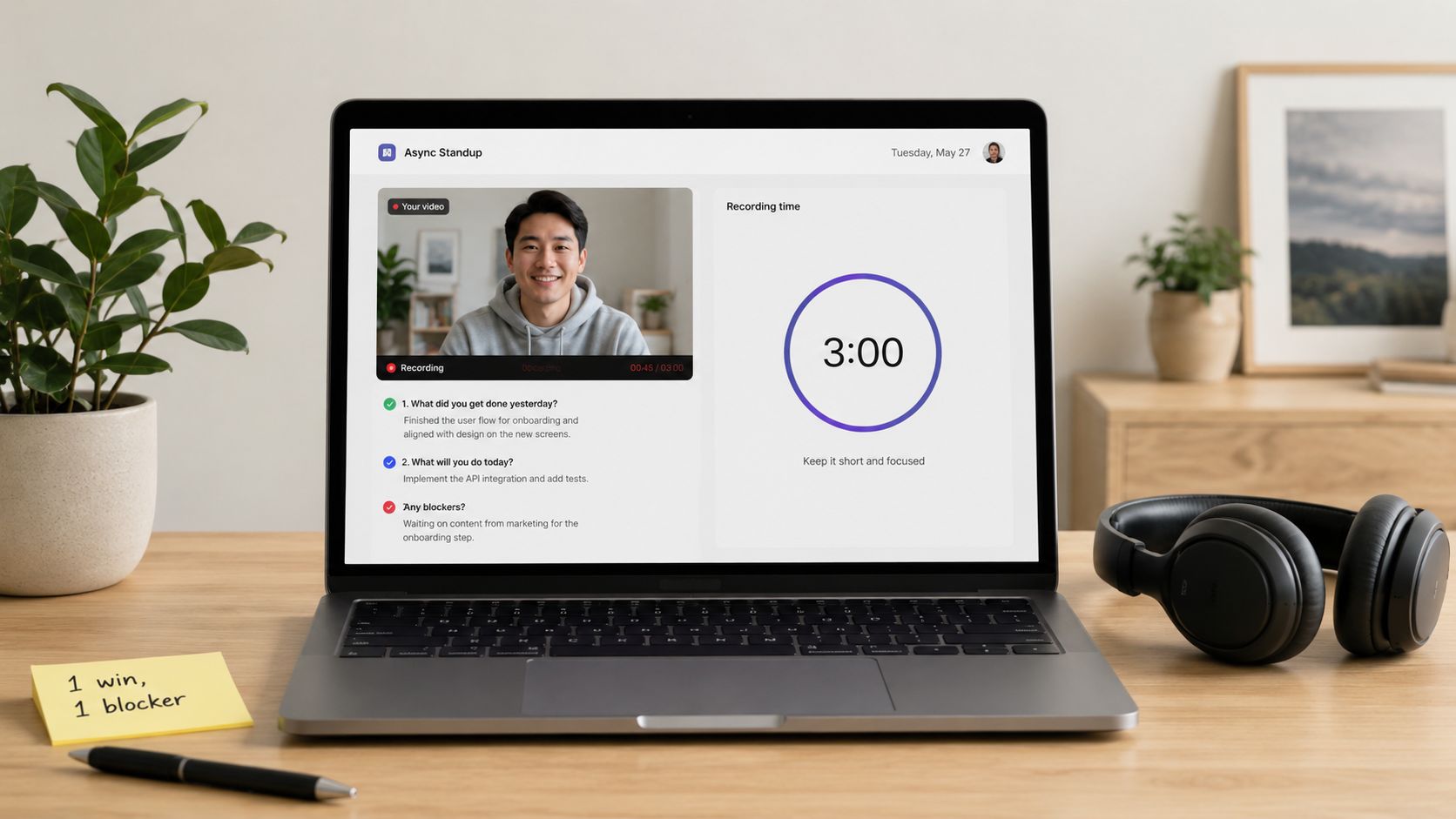
GitLab and Zapier made async work famous for a reason. It respects people's working hours while keeping context visible. For remote client teams, especially the kind covered in this guide to managing distributed teams, that matters more than another recurring meeting ever will.
Boring is good here. Boring means scalable.
Practical rule: Async should reduce pressure, not create a new performance ritual.
There's another benefit leaders miss. Video preserves tone. A typed “all good” can hide a dumpster fire. A quick Loom shows confidence, confusion, urgency, or fatigue fast. You don't need to play therapist. You just need enough signal to lead well.
If someone records later in the day, good. That means async is working. The point is alignment, not synchronized suffering.
Many teams have a knowledge-hoarding problem dressed up as “expertise.” One person knows the paid social testing framework. Another knows how to rescue ugly attribution data. Nobody writes it down. Then they go on vacation and suddenly the company forgets how to function.
Peer-led skill shares fix that.
Give one team member 30 to 45 minutes to teach something practical. Not a broad philosophy lecture. A real workflow, teardown, tactic, or post-mortem. Amplitude and HubSpot have both used rotating internal sessions because internal knowledge transfer beats waiting for some outside guru to bless the room.
The best sessions usually come from the people closest to the work, not the loudest title on the org chart. A growth marketer walking through a landing-page testing process is often more useful than a polished keynote with twelve slides of recycled LinkedIn wisdom.
This also helps hiring and development. If you're building teams around proven ability instead of pedigree, a skills-based hiring approach lines up perfectly with internal teaching. People who can do the work should be able to explain the work.
Try this simple structure:
A 2024 Gallup study found that 52% of remote workers feel disconnected because they lack meaningful work connection and growth opportunities, and the 2025 LinkedIn Workplace Learning Report shows 87% of employees say L&D improves retention. That's in the verified brief for a reason. Growth-focused engagement beats mandatory social theater.
People will participate when the session helps them get better at their job. Shocking, I know.
Competition gets abused in remote teams. Leaders slap a leaderboard on mediocre work and call it motivation. Then the same top two people win every month, everyone else checks out, and congratulations, you've built resentment with trophy graphics.
Do it properly and it works.
Gamification in remote training and performance settings can raise engagement when the scoring is clear and the stakes are real. Verified data included in this brief notes that badge-based incentives increased training platform engagement by 40%, and gamified remote training boosted retention by 15 to 20% in technical teams, based on the source material from CultureMonkey's remote engagement roundup.
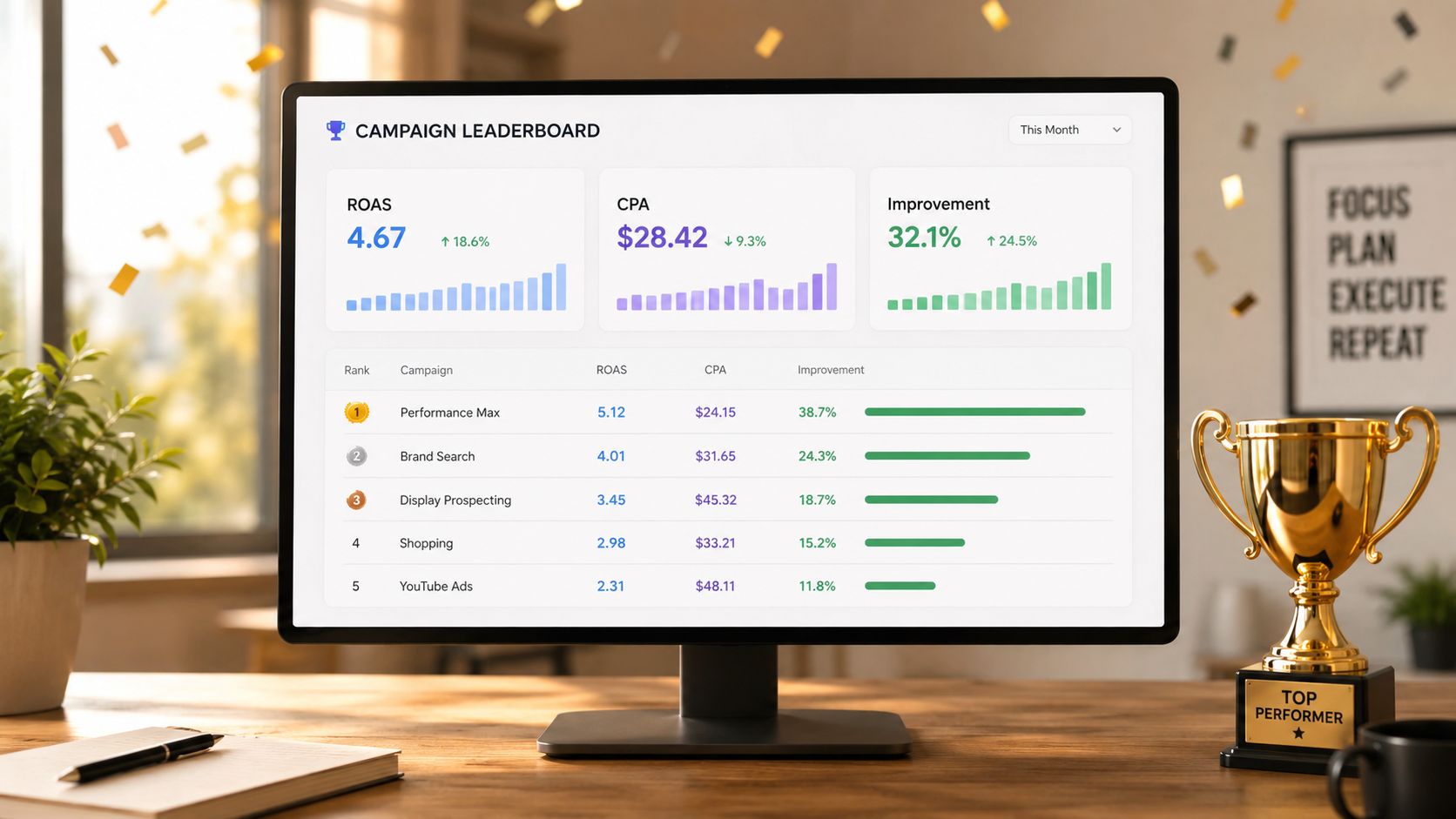
Don't reward whoever inherited the fattest account or the easiest funnel. Reward improvement. Best CPA recovery. Fastest clean scale. Smartest creative test. Best turnaround from a near-dead campaign.
That keeps the game tied to work that matters. It also turns your leaderboard into a teaching tool, especially when you anchor the scorecard to the ad performance metrics your team already uses.
A few rules save this from becoming nonsense:
Friendly competition works. Fake competition doesn't.
I like quarterly rhythms better than weekly ones. Weekly contests can warp judgment and encourage short-term hacks. Quarterly gives people room to test, reflect, and produce something worth copying.
Random coffee chats sound harmless. In practice, they often produce ten minutes of weather chat and one desperate question about weekend plans. Lovely. Electrifying. Exactly what two busy adults wanted.
The fix is simple. Keep the pairings random, but make the prompts intentional.

Instead of “get to know each other,” try prompts like: What's a recent mistake you learned from? What workflow do you wish other teams understood? What part of your job drains you for no good reason? Suddenly the conversation has some oxygen.
This works because low-pressure connection still matters. Verified data from the source material in this brief says companies that rotate hosts for virtual coffee chats and similar rituals saw a 30% increase in team cohesion and a 25% reduction in feelings of isolation, according to Sociabble's write-up on home-office engagement.
Good prompts give introverts a runway and stop extroverts from turning every chat into a one-person podcast.
Use a few guardrails:
One more trick. Rotate hosts or prompt-creators across the company. Don't dump the whole ritual on HR. When engineering, ops, media buying, and leadership all shape the questions, the conversations feel less fake and more like culture built by actual humans.
Nothing kills trust faster than surprise performance conversations. If people don't know what matters until review time, your management system is broken. Not imperfect. Broken.
Transparent OKR reviews fix this by making priorities visible and progress discussable. Team members help shape goals at the start of the quarter, updates happen in public or semi-public, and nobody acts shocked later when a target slips or gets crushed.
Google made OKRs famous, but the useful part isn't the acronym. It's the visibility. When people can see how their work connects to team and company goals, they stop feeling like task rabbits sprinting through someone else's maze.
Many remote employees aren't asking for more social events. They're seeking stronger work connection and clearer growth. Verified material in this brief also points out that optional, growth-focused activities draw 68% higher participation than mandatory social events. That aligns with common sense; adults like progress.
A few rules make OKRs helpful:
The best review cycle is the one that doesn't need a dramatic reveal.
When I see a team dreading review season, I usually find one of two problems. Either goals were vague, or nobody looked at them again after kickoff. Transparent OKR reviews solve both, and they double as one of the most underrated virtual employee engagement activities because they replace anxiety with clarity.
The loudest person in a live retro usually sets the tone. That's not collaboration. That's airtime economics.
Async retros in Notion are cleaner. People submit feedback ahead of time using a simple framework like Start, Stop, Continue. Then the live meeting gets shorter and sharper because the team is discussing themes, not improvising opinions in real time.
Remote teams often falter here. They say they want honesty, then they only create channels that reward speed and confidence. Async retros give reflective people a fair shot to say what's broken, what's working, and what's draining them.
Use one shared template. Set a hard deadline. Read responses before the meeting and pull out a few patterns worth discussing.
A good retro usually includes these buckets:
The trick is accountability. Somebody has to own the follow-up from the last retro. Otherwise retros become emotional composting. Lots of decomposition, no growth.
And yes, celebrate wins too. If your retro only catalogs pain, people stop bringing energy to it. The team needs to hear what to keep, not just what to kill.
A lot of managers say they do one-on-ones. What they really do is status meetings with softer lighting.
A proper one-on-one has a written agenda, shared in advance, with the employee's topics first. That alone changes the power dynamic. It tells people this isn't just another checkpoint for the boss to extract updates.
Use a standing doc. Keep the same headings each time: personal or career updates, feedback both ways, development, open questions. The employee adds items at least a day early. The manager comes prepared with one specific piece of feedback and notes from the last conversation.
Pulse surveys only tell you so much. Verified material for this piece highlights a major measurement gap. A 2024 SHRM report found that 63% of HR leaders struggle to quantify engagement ROI, and a 2025 Harvard Business Review study noted that behavioral data predicts retention 3x better than survey data. In plain English, what people do matters more than what they click on a survey. Consistent one-on-ones create visible behavior: follow-through, coaching uptake, recurring concerns, and growth movement.
Essential considerations:
When one-on-ones work, people bring the hard stuff sooner. Role confusion. Burnout. Ambition. Friction with peers. That's where engagement gets real.
If all wins disappear into the main Slack channel, they're gone. Buried under launch chatter, bug screenshots, and somebody asking who changed the naming convention again.
Create a dedicated celebration channel. Not a chaos channel. A real place for wins, gratitude, milestones, and smart recoveries. GitLab has used #wins-style rituals well, and plenty of fast-growing startups now treat this as basic hygiene.
The point isn't endless confetti. The point is signal. What gets celebrated teaches people what the company values.
Make the channel broad enough to include more than revenue. A clean handoff deserves recognition. So does mentoring a teammate, saving a campaign, writing better documentation, or handling a rough client call well.
You'll get better participation if you reduce friction:
There's a hard business reason to care here. Verified data in this brief states that companies running regular virtual connection programs report that up to one in three employees choose to stay who otherwise would have left. Recognition rituals aren't the whole story, but they're part of the fabric that makes people feel seen.
A celebration channel isn't fluff when it reinforces real standards. It becomes a cultural heartbeat. Quiet, steady, useful.
If your team is bored, overmanaged, or stuck in routine execution, run a sprint. Not a fake “innovation day” where everyone brainstorms into the void. A scoped, time-boxed, cross-functional sprint with an actual deliverable.
Give teams 24 to 72 hours to attack one meaningful challenge. Audit competitors. Build a testing framework. Prototype a new reporting workflow. Pressure helps, but only if the brief is tight and the finish line is real.
Too much freedom kills these things. People drift. Add constraints instead. Limited tools, fixed audience, tight budget, single KPI, defined demo format. Suddenly the work gets sharper.
This kind of engagement has operational upside too. Verified data says organizations using virtual team-building activities saw a 25% increase in engagement metrics over six months, and companies implementing these initiatives reported a 30% increase in team cohesion and collaboration, according to the Zogby Analytics summary of virtual team-building outcomes.
That sounds about right when the activity produces something tangible. People bond faster when they're solving a real problem together, not guessing each other's favorite pizza topping.
A few rules keep hackathons from becoming expensive chaos:
And feed people. Yes, even remotely. Snack stipends, meal credits, whatever. High-intensity virtual work without fuel feels like punishment.
“Let's do mentoring” sounds noble and usually produces vague chats, calendar drift, and polite disappointment.
Skill-based mentorship works better. Pair people around one transfer goal. Building a testing framework. Improving client storytelling. Learning to diagnose account fatigue. Pick the skill, define the output, set a timeline.
The best mentorship uses real work as the classroom. Review live campaigns. Walk through an actual dashboard. Rewrite the brief together. Document the before and after. No one needs another abstract conversation about “career growth” that ends with zero changed behavior.
This approach lines up with what employees value. Verified material in this brief notes that growth-focused engagement draws stronger participation than mandatory social events, and that many remote workers feel disconnected because meaningful work connection is missing. Mentorship addresses that directly.
Fitness and wellness challenges can complement this too. The verified source set for this article notes that remote fitness challenges increased participation rates by 30%, and low-pressure photo challenges reduced feelings of isolation by 25%, according to Deel's virtual engagement ideas roundup. Fine. Useful. Keep them in the mix if your team likes them. But if you want deeper retention and capability gains, mentorship beats step counts every time.
A practical setup looks like this:
Good mentorship scales culture. It turns expertise into a system instead of a personality trait.
| Practice | Implementation complexity | Resource requirements | Expected outcomes | Ideal use cases | Key advantages |
|---|---|---|---|---|---|
| Async Video Standups with Loom | Low–Medium: tool + norms setup | Low: Loom accounts, storage, integrations | Improved async alignment; searchable updates; fewer live meetings | Distributed, time‑zoneed media teams for status and blockers | Preserves personality; flexible scheduling; archival record |
| Peer‑Led Skill‑Share Sessions (No Experts Gatekeeping) | Medium: rotation and culture needed | Low: internal time, basic recording/docs | Distributed knowledge, increased confidence and retention | Small‑to‑mid teams, onboarding, spreading tactical skills | Cost‑effective learning; builds internal IP; mentorship |
| Gamified Campaign Performance Competitions | Medium–High: scoring, guardrails, dashboards | Medium: analytics infrastructure, prize budget, governance | Higher motivation; measurable performance lifts; learning via examples | Metric‑driven media teams aiming for performance gains | Drives measurable results; encourages sharing of winning tactics |
| Virtual Coffee Roulette with Intentional Prompts | Low: matching tool and prompts | Very low: Donut or Slack workflow, calendar blocks | Faster rapport building; improved psychological safety | New hires, cross‑team bonding, dispersed organizations | Low‑cost trust building; organic cross‑team connections |
| Transparent OKR Reviews with Team Input | Medium: process design and manager discipline | Low–Medium: OKR tool or shared doc, recurring check‑ins | Clear expectations, earlier alignment, reduced review anxiety | Goal‑oriented organizations and remote teams | Reduces surprises; aligns individual work to company goals |
| Async Retrospectives in Notion | Low–Medium: template + facilitator | Low: Notion template, time for submissions | Inclusive feedback, concise action items, theme tracking over time | Distributed agile teams and groups with dominant voices | Surfaces quiet voices; shortens syncs; creates archive |
| Structured One‑on‑Ones with Written Agendas | Low–Medium: templates and cadence enforcement | Low: shared agenda docs, regular manager time | Focused development, documented feedback, earlier issue detection | Managers of remote reports; growth‑focused teams | Shifts convo from status to development; increases accountability |
| Celebration Channels (Not Buried in General Chat) | Low: channel and posting guidelines | Very low: Slack channel or digest, light curation | Higher morale, visible recognition, reinforced culture | Remote teams needing visibility for wins and morale boosts | Reinforces values publicly; low cost; leadership amplification |
| Virtual Hackathons or Campaign Sprints | High: scope, logistics, cross‑function coordination | Medium–High: timeboxed effort, tooling, facilitation, optional rewards | Rapid experimentation, tangible outputs, strong team bonding | Testing new channels, rapid ideation, cross‑functional innovation | Sparks creativity; produces real work; intense engagement |
| Mentorship Pairs with Specific Skills to Transfer | Medium: matching, goal definition, tracking | Low–Medium: mentor/mentee time, one‑pagers, checkpoints | Faster skill transfer, documented outcomes, improved retention | Developing junior media buyers; transferring domain expertise | Focused, time‑bound learning; mutual benefit; practical outcomes |
The pattern across all of this is simple. Good virtual employee engagement activities don't distract people from work. They improve how work happens.
That's the mistake most companies make. They treat engagement like entertainment. Then they wonder why nobody's excited for another themed call with breakout rooms and synthetic cheer. People don't want more calendar confetti. They want clarity, growth, recognition, and a team that helps them do better work.
The business case is already staring leaders in the face. The employee engagement software market is projected to grow from $1.43 billion in 2026 to $4.47 billion by 2034 at a 15.30% CAGR, with on-premises solutions holding 50.37% market share in 2026, according to Fortune Business Insights' market projection. Companies aren't pouring money into this because everyone suddenly loves digital morale campaigns. They're investing because distributed teams need systems that keep people connected, productive, and less likely to leave.
And yes, some lighter rituals still have value. Verified source material for this article notes that the “15-minute no-agenda” ritual increased spontaneous collaboration by 40% and improved team morale by 20% over six weeks when implemented consistently. There's room for small, human moments. Just don't confuse low-pressure connection with forced fun. One feels natural. The other feels like being voluntold to smile.
Wellness deserves the same treatment. According to the verified material tied to Sayge's remote engagement overview, companies that implement structured mental health programs saw a 23% increase in overall company profits due to higher productivity. That's a reminder that engagement isn't only about collaboration rituals. It's also about whether people have the support, energy, and breathing room to do good work without frying themselves.
If you're measuring any of this, stop relying only on pulse surveys. Watch behavior. Who shows up to skill shares voluntarily? Who follows through in mentorship? Which retros lead to changes? Which one-on-ones produce visible development? That's where the truth lives. Surveys can help, but they're often too shallow and too easy to ignore.
My advice is boring and effective. Pick one of these activities and run it properly for a quarter. Not for a week. Not once. Long enough for people to trust it and for patterns to show up. Async standups, mentorship pairs, transparent OKRs, coffee roulette with real prompts. Any one of them can change the texture of a remote team if you stick with it.
If you're leading a global team of media buyers or a lean local crew trying not to drown in meetings, the principle is the same. Replace performative engagement with systems that create trust and momentum. People stay where they feel useful, supported, and connected to something that matters.
Do that well and your team might enjoy working together.
Toot, toot!
Need people who can thrive in a remote performance culture, not just look good in an interview? HireMediaBuyers.com helps agencies, DTC brands, SaaS teams, and in-house marketing leaders hire pre-vetted media buyers and paid ads specialists fast. If you want operators who can handle async collaboration, performance pressure, and real accountability without needing their hand held through every campaign, it's a very good place to start.


