

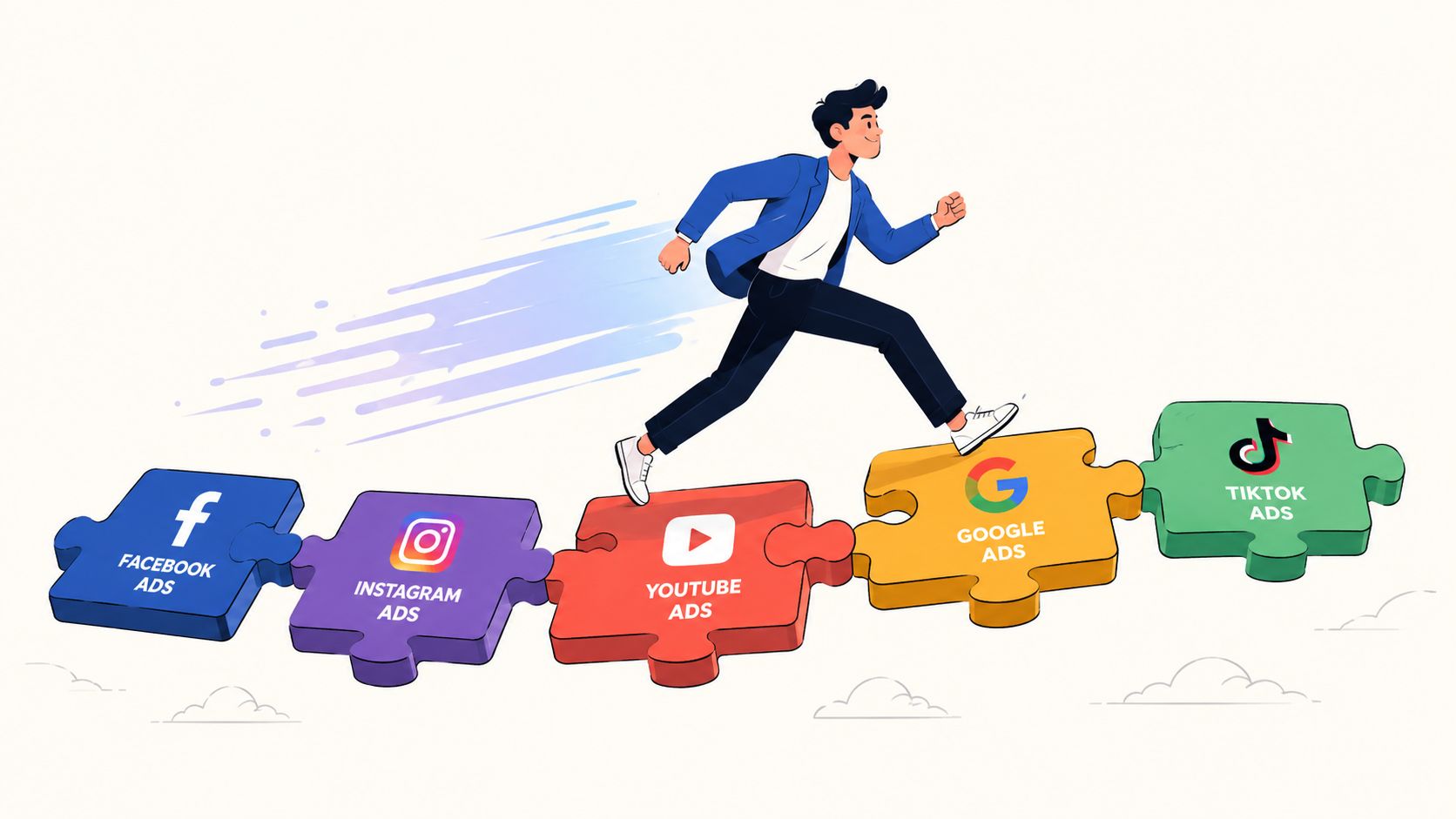
Adaptability to change isn't a soft skill anymore. It's the difference between a media-buying team that keeps learning and one that keeps spending against a playbook that stopped working three platform updates ago. In a 2026 ETS global survey, 77% of employed respondents said job security no longer exists unless people continuously adapt, a finding reported in ETS's adaptability research.
That should sound familiar if you've managed paid acquisition through iOS 14, cookie deprecation, creative policy changes, automated bidding, and clients who discover a new business model halfway through the quarter. The platforms change. The measurement shifts. Your team either updates its decisions or mortgages the budget to yesterday's assumptions.
Most hiring managers still describe adaptability with phrases like “comfortable with change” and “works well under pressure.” Those phrases belong in the same bin as “rock star” and “self-starter.” They sound positive, but they tell you almost nothing about how a buyer behaves when Meta changes delivery, a client rejects the winning angle, or attribution data becomes unreliable before the morning standup.
Adaptability to change is observable behavior. A buyer who adapts doesn't stay cheerful during disruption. They identify what changed, separate signal from noise, revise the plan, communicate the trade-offs, and keep learning while the answer remains incomplete.
The U.S. Bureau of Labor Statistics definition of adaptability is usefully blunt. It describes adaptability as adjusting behavior or work methods in response to new information or changing conditions, while maintaining composure and actively learning relevant knowledge. That's not motivational-poster language. It's a practical description of what a good performance marketer does before lunch.
A flexible media buyer might:
Adaptability belongs in job descriptions, interview rubrics, onboarding plans, and performance reviews. If a candidate only describes change as something they endured, you haven't tested adaptability. Ask what they changed, why they changed it, what they stopped doing, and how they helped other people make the same move.
This article uses three dimensions to make the trait easier to assess: cognitive readiness, behavioral flexibility, and emotional resilience. They give teams a shared vocabulary for discussing real decisions instead of rewarding whoever performs confidence most convincingly in an interview.
Practical rule: Don't ask whether someone likes change. Ask what they did when their best assumption became wrong.
The labor market is sending media leaders a message that many hiring processes still ignore. The World Economic Forum's Future of Jobs 2025 report projects that 59 out of every 100 workers will need reskilling or upskilling by 2030, while 39% of workers' core skills are expected to change or become obsolete within five years.
For media-buying teams, those projections aren't abstract workforce trivia. They describe the operating environment. A buyer may need to learn a new platform, rethink a bidding workflow, interpret altered attribution, use an AI creative tool, and explain privacy-driven reporting limitations without waiting for a neat training course to arrive. The job changes while the campaigns keep spending.
The same WEF report says skills gaps are the most significant barrier to business transformation for 63% of employers across 52 of 55 economies surveyed. A team can own every dashboard, subscription, and account access in the world, then fail to use them because nobody can translate a new capability into a reliable operating habit.
A specialist who only knows one platform is useful while that platform behaves predictably. A buyer who can transfer principles across Meta Ads, Google Ads, TikTok, LinkedIn, and emerging channels gives the team more room to respond when the market changes.
That doesn't mean every person needs to master every channel. It means leaders should know which skills travel. Audience reasoning, offer analysis, creative diagnosis, experimentation design, budget discipline, and client communication remain valuable when interfaces and policies change.
The ETS survey adds another layer. 77% of employed respondents said continuous adaptation is now necessary for job security, according to ETS's global survey findings. In a fast-moving acquisition team, that makes adaptability a baseline hiring requirement, not a bonus awarded after someone survives a chaotic quarter.
Don't measure learning by how many webinars people attend. Look for evidence that a buyer can:
The IC² adaptability model frames the assessment around Cognitive Readiness, Behavioral Flexibility, and Emotional Resilience. That turns a vague personality label into something a hiring manager can observe, discuss, and develop.
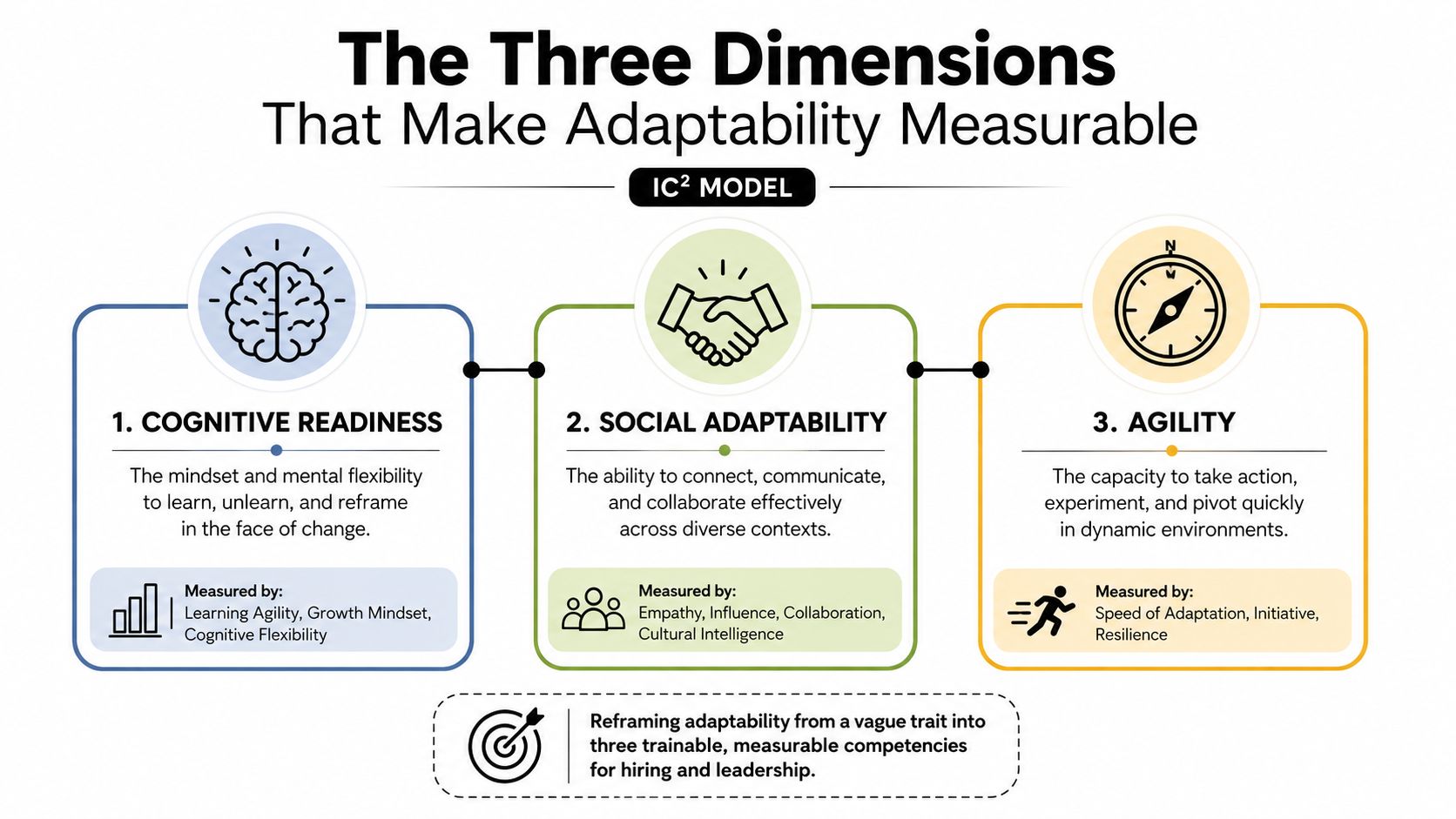
The IC² model gives adaptability a useful spine: Cognitive Readiness, Behavioral Flexibility, and Emotional Resilience. The names matter less than the discipline behind them. Each dimension describes a different failure mode in a campaign team.
A buyer can understand a change but refuse to alter their workflow. Another can move quickly but panic when the numbers wobble. A third can stay calm but never learn the new system. Calling all three “adaptable” hides the problem.
Cognitive readiness is the ability to understand new information, recognize which assumptions are broken, and form a workable mental model before acting.
Consider an attribution change. A cognitively ready buyer doesn't grab the nearest replacement metric and carry on. They ask which conversion event remains useful, how reporting delay affects decisions, which comparisons are still valid, and what evidence would change the recommendation.
In an interview, listen for diagnostic sequencing. Strong candidates explain how they investigated the change before prescribing a fix. They can distinguish a platform reporting issue from a creative problem, a tracking problem from a demand problem, and a temporary variance from a strategic shift.
Behavioral flexibility is the willingness and ability to change the actual method of work. It shows up when a buyer moves from a familiar campaign structure to a new testing approach, changes a creative briefing process, or adjusts budget allocation after evidence invalidates the original plan.
This dimension punishes attachment to rituals. “We've always segmented this way” isn't a reason. A flexible buyer can preserve the objective while replacing the process.
Watch for small signals. Does the person update the naming convention after the team changes its reporting structure? Do they rewrite the test plan when inventory changes? Do they share a failed experiment, or bury it beneath a fresh set of screenshots?
Emotional resilience is staying constructive and decision-capable while the situation is ambiguous, disappointing, or politically uncomfortable. A creative takedown can create frustration. A client pivot can make last week's analysis look irrelevant. A sudden performance drop can trigger blame before diagnosis.
Resilience doesn't mean suppressing emotion or working through exhaustion. It means acknowledging pressure without allowing it to dictate the next decision. The team still needs a clean post-mortem, a clear client message, and a sensible action.
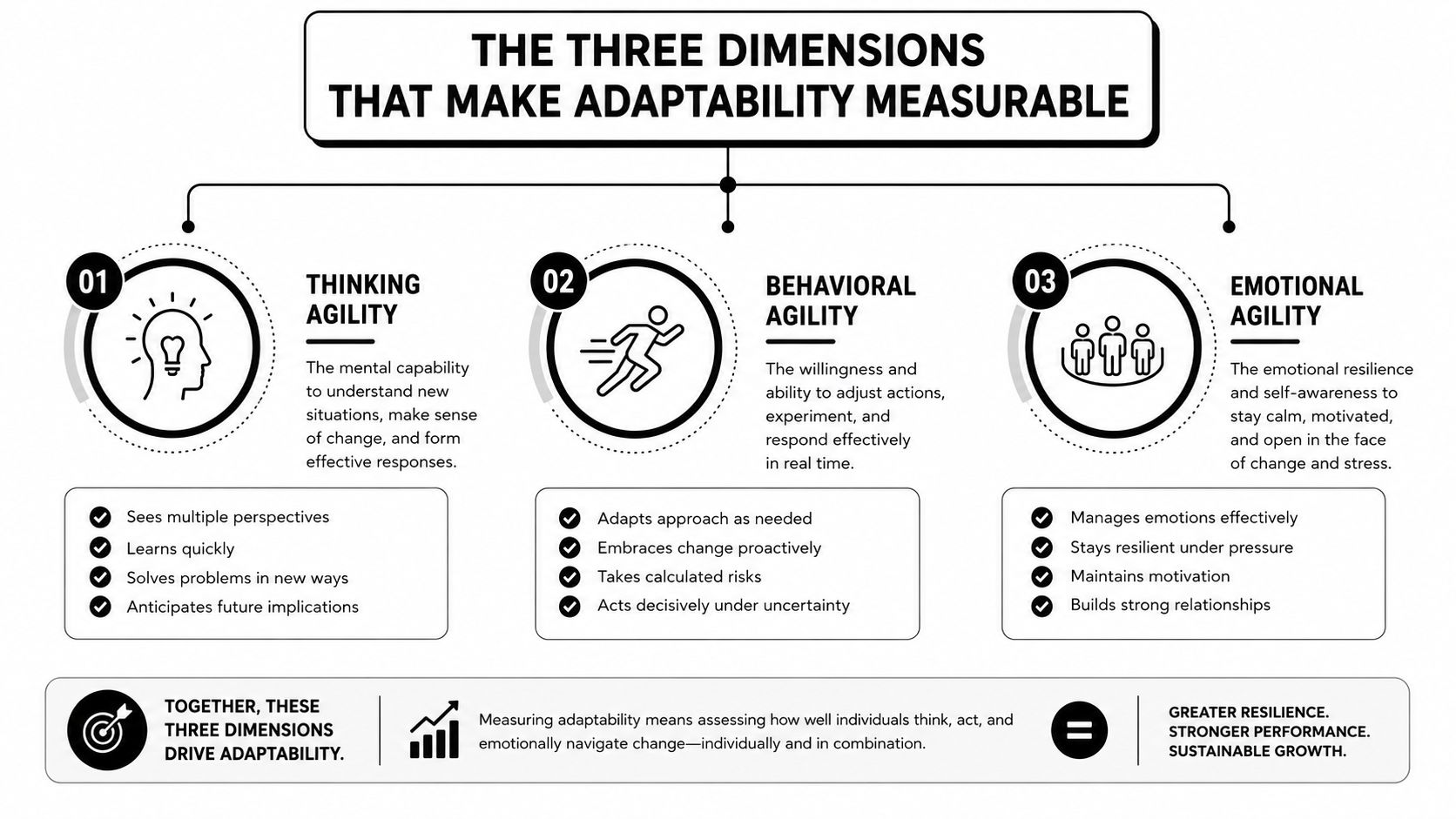
Use these three dimensions in reviews. Replace “good under pressure” with questions such as What did you understand? What did you change? How did you behave while changing it? That vocabulary produces better coaching and far fewer mysterious performance ratings.
The best adaptability interview doesn't ask a candidate to perform optimism. It gives them a realistic problem with incomplete information and watches how they think.
Start with a concrete retrospective prompt:
“Tell me about a campaign where a platform, policy, or measurement change invalidated part of your plan. What did you investigate first, what did you change, and what did you tell the client?”
Don't rush to fill the silence. Candidates often reveal more in the sequence than in the outcome. Look for ownership, specificity, and evidence of learning. “We optimized the campaign” is fog. “We isolated the reporting change, compared the remaining signals, revised the test plan, and documented the decision” gives you something to evaluate.
Give the candidate a short scenario involving a creative rejection, unstable reporting, or a client demand to shift budget quickly. Then ask:
“What would you do in the first hour?”
This tests prioritization and cognitive readiness.
“What would you need to know before making the move?”
This reveals whether the buyer asks useful questions or hides behind endless analysis.
“What would you communicate now, even without a complete answer?”
This tests emotional resilience and client partnership.
“What would make you reverse the decision?”
This shows whether the candidate has a learning loop or merely a strong opinion.
For work samples, request a post-mortem, a testing plan, or a redacted creative iteration history. Inspect how the person records failed hypotheses, changes variables, and explains trade-offs. A polished dashboard can be inherited. A clear chain of reasoning is harder to fake.
Leaders can sabotage adaptability while demanding more of it. A 2025 workplace study on employee responses to organizational change, summarized in the supplied workplace research, indicates that acceptance depends heavily on whether employees feel respected, supported, and given some control during transitions. Telling people to “be more resilient” while removing every decision right is management by shrug.
Deloitte's European workforce research found that 60% of workers reported no major difficulty adapting to COVID-19-driven changes, while only 36% of workers with clear goals and high autonomy still reported difficulty adapting, as documented in the Deloitte adaptability report. The lesson is practical: give buyers a clear destination and enough authority to steer.
Use skills-based hiring for media buyers when your current process rewards pedigree, polished storytelling, or platform name-dropping over demonstrated judgment. Then score candidates separately on cognitive readiness, behavioral flexibility, and emotional resilience. One composite “culture fit” score is how useful information goes to die.
The first team had a floundering campaign, a frustrated client, and a measurement setup that no longer gave them a clean answer. Nobody had a magic fix. They did have a useful habit: they ran a short debrief focused on decisions rather than blame.
The buyer isolated the campaign's strongest customer insight, the creative lead produced new angles around that insight, and the analyst rebuilt the comparison around the attribution window the team could still interpret. The client lead owned the explanation. Within 48 hours, the team had swapped creative angles and attribution windows, with each person clear on the next decision and the evidence required to make it.
The impressive part wasn't speed alone. The team had reduced the number of people waiting for permission. Cognitive readiness helped them define the problem. Behavioral flexibility let them replace the workflow. Emotional resilience kept the client conversation honest without turning it into a funeral for the account.
The second team saw a similar warning sign and chose delay. The buyer kept refreshing the dashboard, the strategist defended the original segmentation, and the account manager waited for a perfect explanation before contacting the client.
The team spent without learning. Each new result created another argument about data quality, but nobody owned a decision rule. Creative testing continued in the old format, the playbook remained untouched, and the client eventually received a vague update after the budget had already compounded the wrong way.
This is what poor adaptability looks like in practice. It isn't always dramatic refusal. Often it's small, reasonable delays repeated until the campaign has no useful learning left.
Distributed teams make these habits more visible. Without explicit ownership, a change can sit between the buyer, analyst, creative specialist, and account manager until everybody has acknowledged it and nobody has acted. The operating practices in managing distributed media-buying teams matter because adaptability needs clear handoffs, written decisions, and visible accountability.
The first team had three simple behaviors:
The frozen team had meetings. It had expertise. It probably had a more impressive dashboard. What it lacked was a mechanism for converting new information into coordinated behavior.
Adaptability isn't a heroic rescue performed by the smartest person in the room. It's a chain of ordinary decisions made quickly, documented clearly, and revisited when the evidence changes.
Training adaptability through motivational speeches is a waste of everybody's calendar. Build routines that make learning part of delivery, then protect people from the fantasy that constant emergency equals high performance.
Start with short-cycle training. When Meta, Google Ads, TikTok, or a measurement tool changes, assign one person to test the update, one person to challenge the conclusion, and one person to document the practical implication. Keep the output narrow: what changed, which accounts are affected, what action is safe, and what remains unknown.
Role rotation spreads context before a crisis forces it. Let a buyer review creative briefs, let a creative strategist sit in on performance diagnosis, and let an analyst explain reporting limitations to the client team. The point isn't to turn everyone into a generalist. It's to prevent the account from depending on one person's private mental model.
Run contingency exercises without putting live budget at risk. Create a fake attribution outage. Give the team a sudden creative disapproval. Ask them to produce a decision, a client update, and a short post-mortem. You'll learn more from that exercise than from another slide deck about agility.
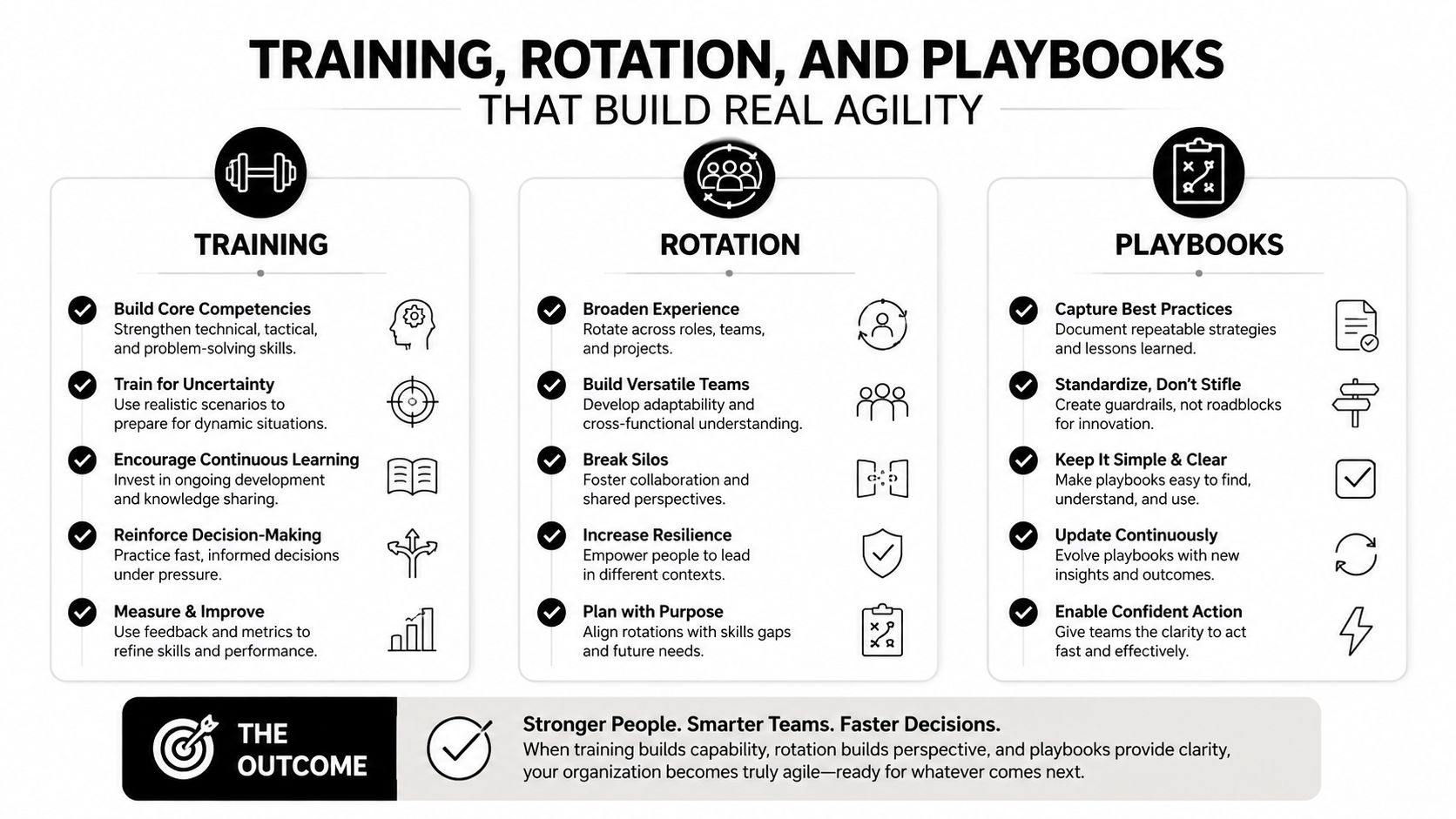
A useful playbook records decisions, not slogans. Include the trigger, the diagnostic checks, the approved response, the owner, and the condition that would cause the team to revisit the response. If nobody updates it after a real incident, it's not a playbook. It's office décor with better typography.
A simple 30-60-90 day plan works well:
Continuous change can damage the people expected to absorb it. A 2025 global resilience report classified more than half of the workforce as “functioning but fragile.” That phrase deserves attention from every founder who has ever called exhaustion “commitment.”
Recovery time, protected focus hours, and reasonable change sequencing are operating controls. They give people enough capacity to learn instead of merely react. KPMG's 2026 adaptability index draws on a survey of 300 U.S.-headquartered C-suite and senior leaders, analysis of 177 companies' 2025 earnings-call transcripts and year-over-year revenue changes, and external capital and workforce signals. It also reports that less than 10% of leaders said their organizations had most increased psychological safety, a warning for teams that expect fast behavior change without creating room to speak.
Use structured team exercises, including suitable games for virtual teams, to strengthen trust and communication. Just don't schedule them on top of the focus time people need to do the actual work. Toot, toot, the calendar is part of the operating model.
Change is already part of the workload, whether your org chart admits it or not. In a 2026 Eagle Hill Consulting survey of 1,448 employed U.S. adults, 63% said they experienced at least one workplace change in the past year, and 45% said those changes increased their workload. Those findings don't prove that every adaptation program works. They do show why teams need a deliberate way to absorb change instead of improvising through every platform update.
Adaptable teams scale capacity because they learn faster, distribute context, and reduce the number of decisions trapped with one specialist. They also reduce avoidable fire drills. The business case isn't “make everyone more flexible.” It's build a team that can change its method without losing judgment, communication, or recovery capacity.
Run this checklist next week:
If your hiring rubric still treats adaptability as a personality adjective, replace it. If your playbook only describes normal conditions, stress-test it. And if your team needs a new person who can handle platform shifts without needing a ceremonial burning of the old spreadsheet, hire for demonstrated behavior.
HireMediaBuyers.com helps US companies find pre-vetted Media Buyers and Paid Ads Specialists across channels including Meta Ads, Google Ads, LinkedIn, TikTok, Microsoft/Bing, Apple Search, Pinterest, and YouTube. Visit HireMediaBuyers.com to browse flexible remote talent or get a shortlist for the next change your acquisition team needs to handle.


