


You're staring at a pile of polished resumes, half of them read like they were edited by a team of interns, and the other half somehow all “managed multi-channel growth” without ever saying what they did. Meanwhile, the role is still open, your team is tired, and you can already feel the cringe when someone says, “They interviewed really well.” Great. So did the last person who torched two months of budget and left you with a broken handoff doc.
How to assess technical skills without turning the process into a glorified personality contest comes down to one blunt truth, hire for evidence, not theater. If the candidate can't do the work in a way that looks like the work, your process is just expensive wishful thinking.
The classic technical interview has a bad habit of rewarding the loudest person in the room. You ask a few abstract questions, the candidate gives polished answers, and everyone leaves feeling oddly reassured. Then month two hits, the campaigns wobble, and you realize you hired a talker, not a builder.
I've watched this play out enough times to stop pretending it's mysterious. A candidate walks in with neat bullet points, a clean LinkedIn, and just enough confidence to make the room relax. The team mistakes that comfort for competence, which is how you end up babysitting a hire who knows the vocabulary but not the job.
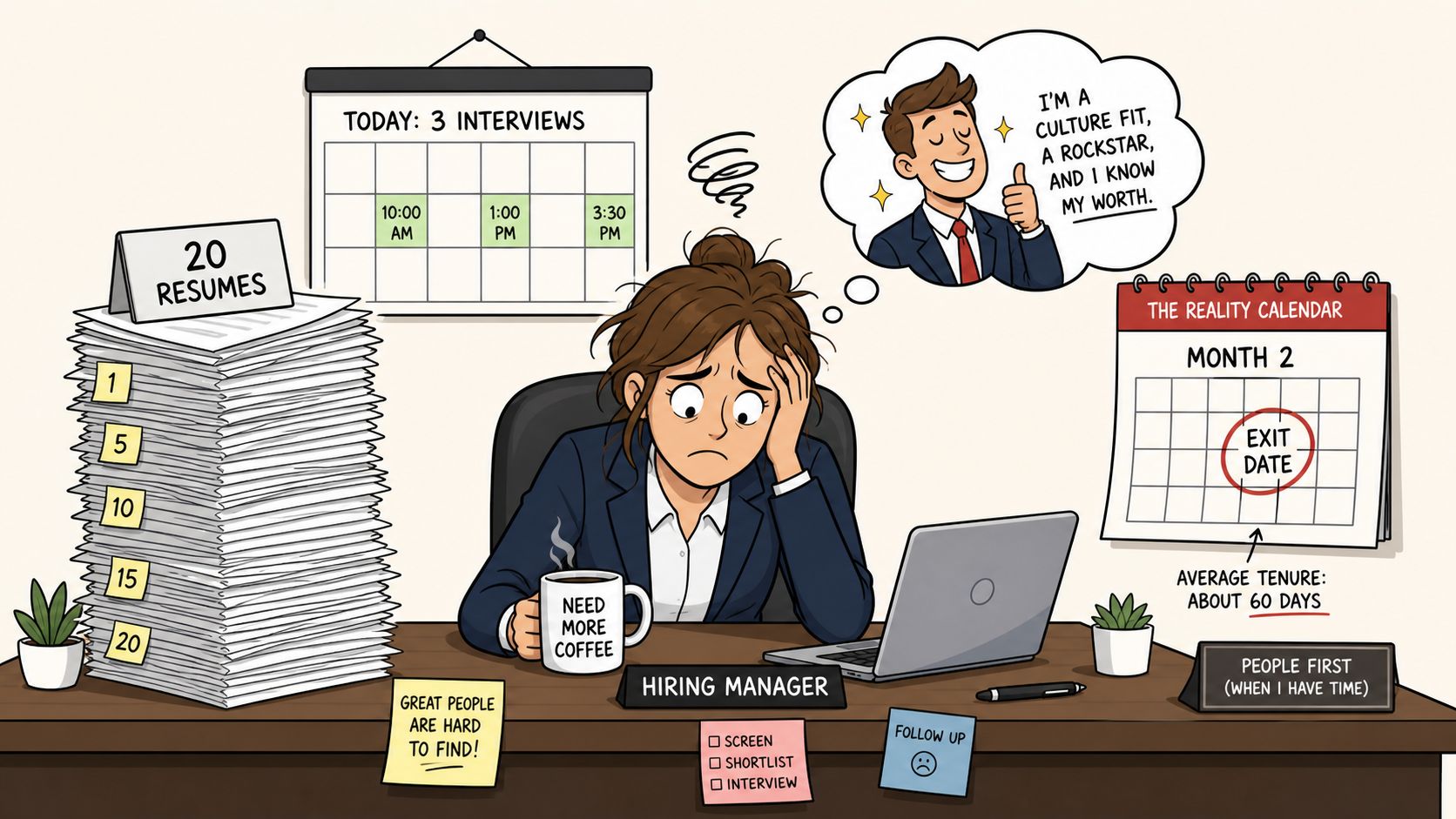
Practical rule: if the interview could be passed by someone who has never touched your actual workflow, it's not an assessment. It's a vibe check with better lighting.
The problem is structural. Unstructured interviews drift toward trivia, generic “tell me about yourself” prompts, and polite scoring that rewards charisma. That's why realistic work samples and job-relevant simulations matter so much, because the closer the test looks like the job, the better the signal gets. One industry summary even puts realistic coding challenges at 91% accuracy versus 67% for whiteboard tests in predicting performance, which is exactly why whiteboard theater keeps failing people in real life. Research summary on realistic coding challenges versus whiteboard tests
A weak technical hire doesn't just miss targets. They slow everyone else down. Strong teammates start double-checking work, managers spend more time translating vague updates than making decisions, and the rest of the team learns that mediocrity is tolerated if it interviews well enough.
The fix isn't “interview harder.” It's to stop treating assessment like a casual conversation and start treating it like a controlled test of work. That means role clarity, realistic tasks, and a scoring system that can survive a bad mood, a confident candidate, or a founder who secretly likes the cut of someone's jib.
If you haven't defined the role, you're not assessing skill. You're measuring who can improvise best in front of strangers, which is a lovely trait for karaoke, not for hiring. The job has to be broken into competencies before you write a single question.
For technical roles, a useful framework starts with 5 to 10 core roles, then expands into 8 to 15 competencies per role, each tied to observable behavior and proficiency levels. That's not bureaucracy, that's basic sanity. It keeps the process from turning into a random collection of pet questions that say more about the interviewer than the candidate. ITU skills assessment best practices
For paid media, this gets concrete fast. A Meta Ads buyer doesn't need the same map as a LinkedIn campaign manager, even if both jobs live under the same “performance marketing” umbrella. One role may lean harder on creative testing cadence and budget pacing, another on attribution modeling and lead quality, and another on audience strategy across more than one platform.
If you want a sane hiring process, make every competency observable. “Good communicator” is useless. “Explains why a campaign shift was made, names the trade-off, and can defend the change against a skeptical client” is something you can score.
| Competency | Proficiency Level | Observable Behavior |
|---|---|---|
| Campaign structure | Mid-level | Organizes campaigns with clean naming, logical segmentation, and clear objective alignment |
| Budget pacing | Mid-level | Notices overspend or underspend early and explains the fix without hand-waving |
| Creative analysis | Mid-level | Identifies what's working in an ad and ties it to performance data instead of taste |
| Attribution thinking | Mid-level | Can explain why results differ across platforms without blaming the dashboard |
| Client communication | Mid-level | Turns messy account updates into crisp, useful summaries |
| Testing discipline | Mid-level | Proposes specific hypotheses instead of “let's test more creatives” |
| Platform fluency | Mid-level | Uses the actual tool correctly, not just the terms from a course |
| Troubleshooting | Mid-level | Diagnoses a drop in performance with a process, not panic |
Use that map to write the interview, the work sample, and the rubric. If a question doesn't connect to one of those competencies, cut it. Sentimentality is expensive.
Your rubric should read like a contract, not a horoscope.
Revisit the map quarterly, or after major platform changes, because paid media moves fast and stale assessments become museum pieces with better formatting. If you want a model for skills-based hiring language, this hiring resource is a useful reference point.
Different formats reveal different things. Pick the wrong one and you either create fake pressure, fake convenience, or fake confidence. None of those help you hire better.
A live task is best when you want to see raw thinking fast. It's useful early in the funnel, especially for junior or mid-level candidates, because you can watch how they approach a concrete problem in real time. The downside is obvious, it can become a stress test disguised as fairness, and that noise can hide good judgment.
A take-home gives candidates breathing room. That helps when the role demands deeper thinking or a more polished output, but it also invites unpaid labor concerns and filters out people who can't spare an evening to do spec work. That's not a tiny issue, it's the part hiring teams like to ignore until candidates start ghosting.
A case audit is the least flashy and often the most honest for senior roles. You're looking at a real account, a real decision trail, or a realistic teardown, and asking the candidate to explain what they'd do next. That's where strategy shows up, or doesn't.
Use the live task when speed and baseline competence matter most. Use the take-home when you need better signal on depth and can justify the time cost. Use the case audit when the job is specialized, demands exacting judgment, and you need to know how the person thinks in a messy, real environment.
Legal and ethical issues matter too. If you're asking for work that looks like deliverable labor, you need to think about IP ownership and candidate experience. If your “assessment” feels like free consulting in disguise, don't be shocked when strong candidates pass.
The best format is the one that makes cheating hard, effort proportional, and the job visible.
If you want a cleaner hiring sequence, put the format decision inside your funnel design rather than letting the last interviewer decide on instinct. A good overview of timing and stage design belongs in a practical hiring timeline, because this stuff gets sloppy fast when teams improvise.
A rubric without behavioral anchors is just a feelings document with headers. I've seen too many teams call that a process, then act surprised when two interviewers give the same candidate wildly different scores. That isn't rigor, that's decorative math.
Start with a simple scale, then define what each level looks like in behavior. A 2 should mean the candidate has partial skill but misses key pieces. A 4 should mean the candidate is reliable and mostly independent. A 5 should mean they not only do the work well, they do it in a way that improves the system around them.
For a Meta Ads buyer, a good rubric might cover campaign structure, creative analysis, budget pacing, troubleshooting, and client communication. Each cell needs anchor language. Not “strong understanding.” That phrase is interview wallpaper. Use descriptions like “identifies structural issues in the account and proposes a fix with clear trade-offs” instead.
Before anyone scores, calibrate the team. Watch the same work sample together, compare notes, and force the conversation until the language is consistent. That's how you keep one interviewer from rewarding polish and another from rewarding bluntness.
Use rules that remove wiggle room:
The scoring discussion should happen quickly after the interview, while the details are still fresh. Delay it and memory gets mushy. Mood gets loud. The rubric gets rewritten by whoever talks the most.
Useful test: if you can't explain why a candidate got a 3 instead of a 4, your rubric isn't working yet.
The goal here is consistency across interviewers. That doesn't mean robots. It means two people can watch the same candidate and land within a point of each other without a philosophical debate about “presence.”
Most hiring processes go off the rails here. Teams either make the first screen so long that candidates bail, or they make the work sample so vague that anyone can fake competence with enough confidence and a decent browser tab.
The screening test should stay under 60 minutes. That's the useful boundary because it respects the candidate's time and keeps the exercise focused on signal, not endurance. Well-designed technical tests often land around 20–40% pass rates, with 30–40% often treated as typical in hiring guidance. A pass rate around 80% usually means the test is too easy. Around 5% usually means you built a trap instead of an assessment. Technical skills assessment guidance
If the screen is working, it should feel slightly uncomfortable but fair. The candidate should know what's being tested, what “good” looks like, and how long they have. If you can't explain that cleanly, your process is the problem, not the candidate pool.
The work sample is where you see whether the candidate can do the job. For paid media, that might mean auditing a real Meta Ads account, restructuring a Google Ads brief, or drafting creative test hypotheses from a messy performance report. Give clear instructions, define the time budget, and score the output against the rubric you already built.
Do not mistake polish for thinking. Some candidates hand back a slick deck with almost no decision quality inside it. Others deliver a rougher response that shows sharp judgment, strong prioritization, and a better grip on the account than the pretty one. Hire the second person more often than the first.
A useful flow is simple:
That sequence works because it narrows noise before you start asking for depth. It also protects the interview from becoming a fishing expedition where every question is a new guess.
If your screening and work sample don't connect to the final interview, you're collecting artifacts, not making hiring decisions.
For teams trying to keep the process sane, the work sample should feed straight into the interview questions. No duplicate homework, no second round of “walk me through what you did” with different people asking the same thing. That's just hiring theater with calendar invites.
Most technical interviews are just resume recaps with a fancier title. That's a waste. Treat the conversation like an investigation into how the candidate works, and suddenly you learn something useful.
Open with context, not gotchas. Give the candidate room to explain why they made the choices they made in the work sample. Then ask where they'd change course if budget, timing, or client constraints shifted.
A tight structure helps:
That last part matters more than people think. Good candidates ask sharper questions than weak ones, and they often expose issues in your setup that your team missed.
For media buying, strong probes sound like this:
These questions work because they force a candidate to show reasoning, not memorized language. If the answer is a canned monologue, you've learned something too.
The technical interview should feed a same-day or next-day scoring conversation. Let it drift longer than that and the group starts arguing from vibes, not evidence. The best interviews don't end in applause, they end in a clear yes, no, or maybe with a documented reason.
If the candidate's answers line up with the work sample and the rubric, that's your signal. If they don't, stop talking yourself into a “strong culture fit” rescue. That phrase has buried more bad hires than bad market conditions ever did.
A good assessment system doesn't stop at the offer letter. It should shape onboarding, performance expectations, and the moment you decide a hire isn't working. Otherwise, you've built a very elaborate way to be surprised later.
The same scorecard that helped you choose the candidate should guide the first 30 days. If someone scored lower on attribution thinking but high on execution speed, don't onboard them like a strategy generalist. Focus training where the gaps are.
That makes the assessment summary useful instead of ceremonial. Write down what the hire is already strong at, where they'll need support, and what you'll measure first. The point isn't to congratulate yourselves for being rigorous. The point is to get the person productive faster with less hand-holding.
At the 90-day check-in, use the same rubric again. That gives you a clean comparison between what the candidate showed in assessment and what they're doing on the job. If the gap is wide, the problem is either the assessment, the onboarding, or the person. Nice and tidy. Mostly.
Weak hires often reveal themselves early if you're honest enough to look. If someone repeatedly misses on the same competencies they struggled with in the assessment, don't pretend it's a temporary wobble. Coaching has a place. Denial has no value except to your morale team, assuming you still have one.
For lean teams that don't want to build the whole system from scratch, client references can help you sanity-check whether a hiring source delivers people who perform, not just people who interview well. That matters when you're trying to reduce risk instead of just filling a seat.
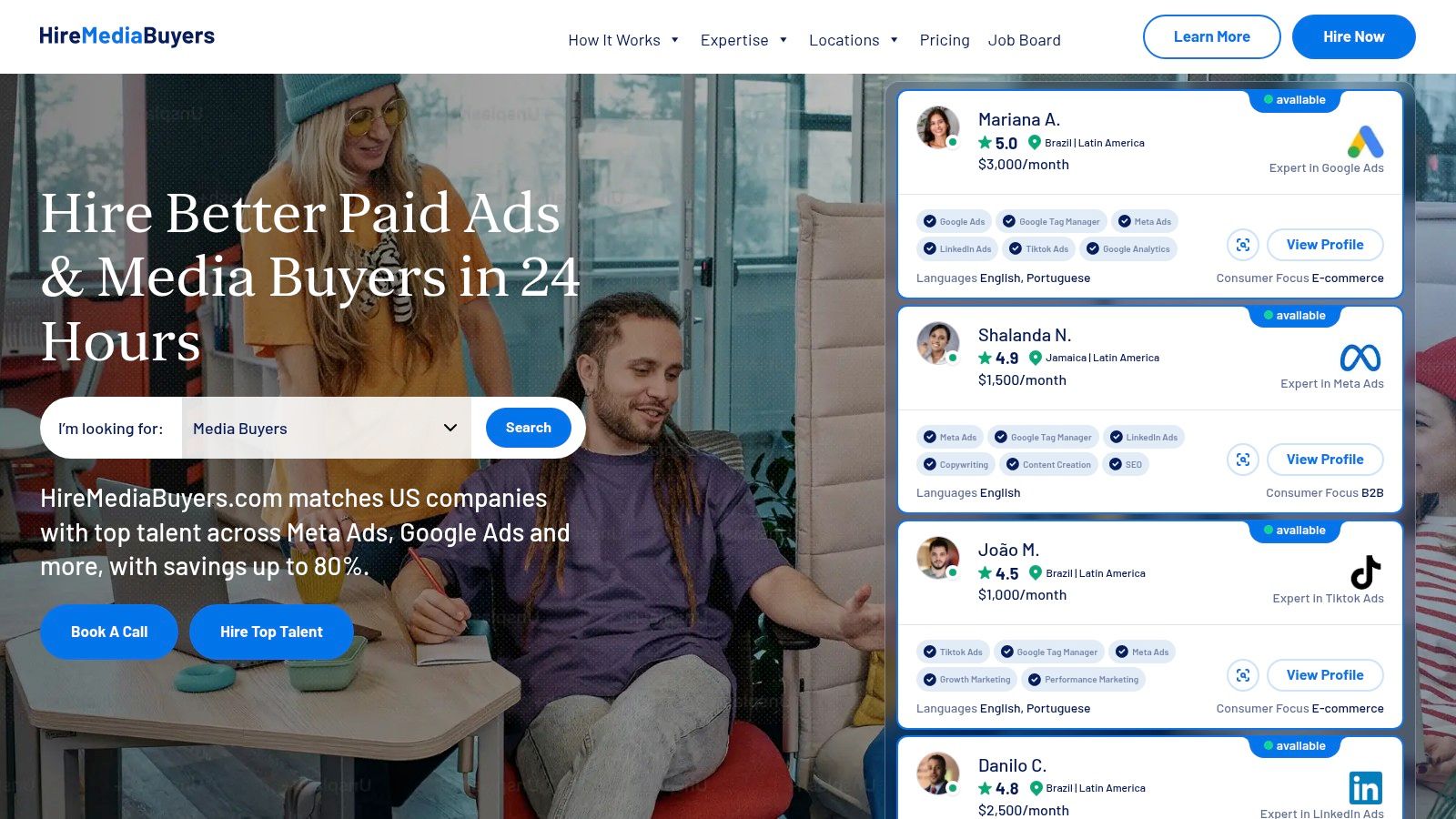
The cleanest setup is simple. Assess the skill, document the gaps, hire with the gaps in mind, then measure the same things after onboarding. That's how assessment stops being an HR ritual and starts acting like a risk filter.
If you want a faster, less painful way to hire paid media talent who've already been screened for actual skill, take a look at HireMediaBuyers.com. They specialize in pre-vetted media buyers and paid ads specialists, so you're not starting from a pile of hopeful resumes and a whiteboard problem.


